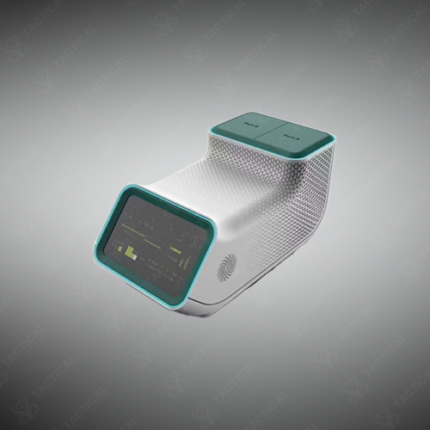
Quantitative PCR Instrument
Quantitative PCR instruments amplify and simultaneously measure target DNA or RNA sequences in real time — generating fluorescence data at each amplification cycle that the system converts into quantitative copy number results without post-amplification gel electrophoresis or separate detection steps. These instruments are the standard platform for gene expression analysis, pathogen load quantification, viral titer measurement, GMO detection, and clinical diagnostic applications requiring precise nucleic acid quantification.
The qPCR reaction uses a thermostable DNA polymerase to amplify a target sequence across repeated thermal cycles — typically denaturation at 95°C, annealing at 55 to 65°C, and extension at 72°C. Fluorescent probe chemistries report amplification progress in each cycle. TaqMan hydrolysis probes use a dual-labeled oligonucleotide that generates fluorescence signal only when the probe is cleaved during target amplification — providing high specificity for single target detection. SYBR Green intercalating dye binds all double-stranded DNA — generating fluorescence proportional to total amplicon accumulation and suited for multi-target screening without probe synthesis costs. Furthermore, the cycle threshold (Ct) value — the cycle number at which fluorescence crosses a defined threshold — provides quantitative data on starting template copy number through comparison against standard curves or reference gene normalization.
Multiplexing capability on multi-channel qPCR instruments detects 4 to 6 different fluorescent dyes simultaneously. This enables detection of multiple pathogens or genetic targets from a single reaction well — directly relevant to respiratory virus panels, sexually transmitted infection multiplex assays, and food pathogen screening workflows. Additionally, high-throughput 384-well format instruments process 384 individual reactions simultaneously — suited to pharmaceutical drug discovery screening, biomarker validation, and large-scale population genomic studies.
Instruments such as the Bio-Rad CFX Opus 96, Applied Biosystems QuantStudio 5, and Roche LightCycler 96 represent current professional qPCR platforms covering 96-well standard format at scan speeds under 5 minutes per plate.
These instruments serve Pakistan’s hospital infectious disease diagnostic laboratories, Shaukat Khanum Memorial Cancer Hospital molecular oncology programs, public health reference laboratories for epidemic pathogen surveillance, pharmaceutical quality control departments in Karachi and Lahore, and university molecular biology research departments requiring accurate, high-throughput nucleic acid quantification.
Showing the single result