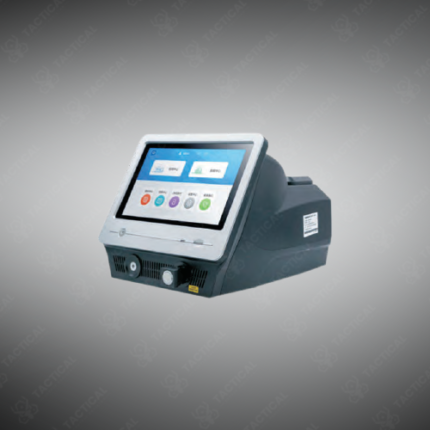
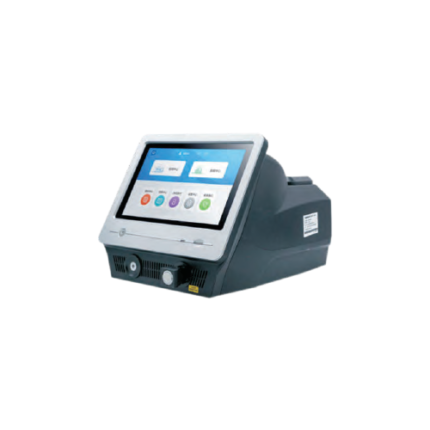
Portable Food Safety Raman Detector
Portable Food Safety Raman Detectors identify food adulterants, contaminants, and chemical substances in food products using handheld Raman spectroscopy — delivering rapid, on-site molecular identification without laboratory sample preparation, chemical reagents, or destructive testing. These instruments give food safety inspectors, quality control officers, and customs teams a field-deployable verification tool for high-priority food safety screening.
Raman spectroscopy directs a focused laser beam — typically at 785nm or 1064nm — onto the sample surface. The laser excites molecular vibrations in the target substance. The detector captures the inelastic Raman scatter spectrum and matches it against an onboard reference library containing thousands of food substances, adulterants, and contaminants. Results appear as confirmed identification with a confidence percentage in under 30 seconds. Furthermore, through-container measurement on advanced models identifies substances through sealed plastic packaging, glass bottles, and transparent films without opening the product — preventing sample contamination and maintaining product integrity during testing.
Common food adulteration targets detectable by portable Raman include melamine in milk powder, starch dilution in spices, Sudan dye contamination in chili powder, urea adulteration in milk, boric acid in seafood, and inorganic phosphate bulking in meat products. Additionally, pesticide residue screening, heavy metal precursor identification, and pharmaceutical drug adulteration in food supplements extend the instrument’s screening capability beyond straightforward adulterant identification. Oil authentication — distinguishing pure olive oil, sesame oil, and mustard oil from diluted blends — is another high-value application for Pakistan’s food processing and import inspection programs.
Instruments such as the Metrohm Mira DS, Thermo Fisher TruScan RM, and Ocean Insight i-Raman Plus cover measurement ranges from 200 to 3,200 cm⁻¹ Raman shift with spectral resolutions of 8 to 12 cm⁻¹. These suit identification of both pure substances and complex food matrix samples. Moreover, onboard libraries update via USB or wireless connection as new adulterants and reference spectra are added — maintaining detection currency against evolving adulteration methods.
These detectors serve Pakistan’s Punjab Food Authority and Sindh Food Authority field inspection teams, FBR customs food import screening at Karachi Port, supermarket chain quality assurance programs, pharmaceutical food supplement compliance teams, and agricultural commodity trading operations in Punjab’s grain and spice markets requiring rapid, non-destructive food authentication in the field.
Showing the single result