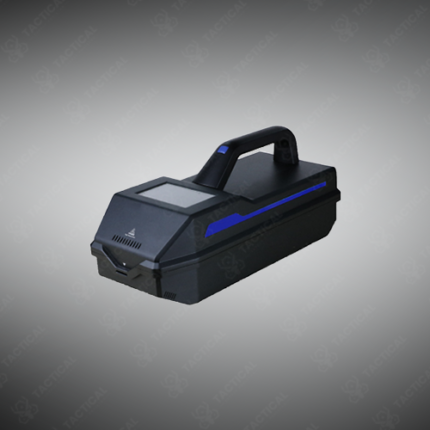
Portable Explosives Drugs Detectors
Portable explosives and drugs detectors combine trace detection technologies for both controlled substances and explosive compounds in a single field-deployable instrument — giving customs officers, law enforcement teams, and border security personnel dual-threat screening capability without carrying separate devices for narcotics and explosives detection.
Ion mobility spectrometry (IMS) forms the analytical core of most combined explosive and drug detectors. The instrument ionizes sample molecules drawn from a swab or ambient air sample. Ions then separate through a drift tube under an applied electric field. Each compound produces a characteristic drift time that the instrument matches against its reference library. A single IMS detector covers explosives including RDX, PETN, TNT, TATP, and ammonium nitrate alongside controlled substances including heroin, cocaine, methamphetamine, MDMA, fentanyl, and cannabis. Furthermore, dual-channel IMS configurations run explosive and drug detection simultaneously in separate ionization regions — eliminating the mode-switching delay of single-channel systems at high-throughput checkpoints.
Raman spectroscopy modules add bulk material identification to the IMS trace detection capability. Through-barrier Raman identifies substances inside sealed packaging without opening — protecting officers from direct contact with fentanyl and primary explosives during field testing. As a result, combined IMS-Raman instruments cover trace residue detection and bulk material confirmation from a single device. Additionally, colorimetric test kit integration on some platforms adds a low-cost presumptive chemical confirmation step alongside the instrumental analysis results — providing multi-method evidence documentation for prosecution support.
Professional combined detectors such as the Smiths Detection IONSCAN 600, Autoclear Sentio, and Bruker RAID-XP identify over 40 explosives and 60 drug compounds. Onboard libraries update via USB or wireless connection. Results display compound name, confidence level, and alarm classification within 8 to 12 seconds of sample introduction. Moreover, data logging with timestamps, operator ID, and GPS location builds an auditable screening record for each test event.
These detectors serve Pakistan’s ANF field teams, FBR customs narcotics and explosives screening at Karachi Port and Torkham border crossing, Pakistan Rangers checkpoint operations, aviation security teams across Islamabad, Lahore, and Karachi airports, and Counter Terrorism Department vehicle and personnel screening operations requiring dual-threat detection capability.
Tactical Supply Pakistan supplies portable explosives and drugs detectors for checkpoint screening, aviation security, customs enforcement, and counter-terrorism operations procurement across Pakistan.
Showing the single result