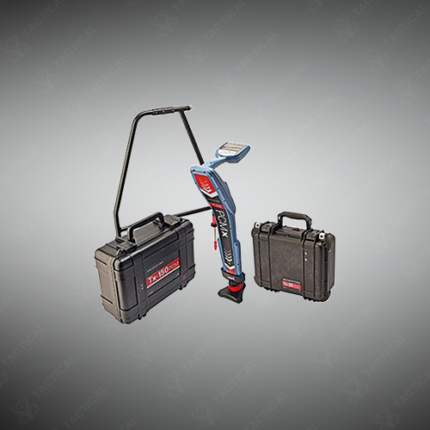
Pipeline Corrosion
Pipeline corrosion detection and monitoring equipment identifies, measures, and tracks metal loss and degradation on buried and above-ground pipeline systems caused by electrochemical reactions between the pipe material and surrounding soil, water, or transported fluid. Left undetected, corrosion progresses to wall thinning, pitting, and eventual perforation, causing leaks, pressure loss, and catastrophic failure in gas distribution, fuel pipeline, and water supply networks across Pakistan’s aging infrastructure.
Corrosion assessment instruments cover several distinct measurement methods suited to different pipeline access conditions and defect types. Ultrasonic thickness gauges use a piezoelectric transducer pressed against the pipe surface to measure remaining wall thickness through pulse-echo time-of-flight calculation, detecting wall thinning to measurement resolution below 0.1mm on steel pipe walls between 1mm and 300mm thickness. Additionally, magnetic flux leakage tools run inside the pipeline bore on a pig carrier, detecting localized flux disruption above corroded wall sections as the tool travels through the pipe at controlled speed, producing a continuous wall condition profile along the full surveyed length without external access to the buried pipe route.
Electrochemical corrosion monitoring uses half-cell reference electrodes and data loggers placed at pipe surface contact points to measure pipe-to-soil potential, identifying sections where cathodic protection systems are underperforming and leaving pipe wall exposed to active electrochemical attack. Furthermore, close interval potential survey equipment measures cathodic protection potential at regular spacing intervals along the pipeline route above ground, producing a continuous protection level profile that highlights deficient sections requiring cathodic protection system adjustment or anode replacement.
Corrosion rate monitoring probes installed in pipe wall penetrations or bypass spools measure metal loss rate in real time using electrical resistance or linear polarization resistance methods, with data loggers recording corrosion rate trends over weeks and months. Moreover, coating holiday detectors apply a high-voltage pulse across the external pipe coating surface, identifying pinhole defects and delaminated sections where bare metal exposure accelerates corrosion attack beneath the coating.
Tactical Supply Pakistan supplies pipeline corrosion detection and monitoring equipment to gas distribution companies, fuel pipeline operators, water utility authorities, and petrochemical plant maintenance teams requiring comprehensive corrosion assessment capability across pipeline infrastructure throughout Pakistan.
Showing the single result