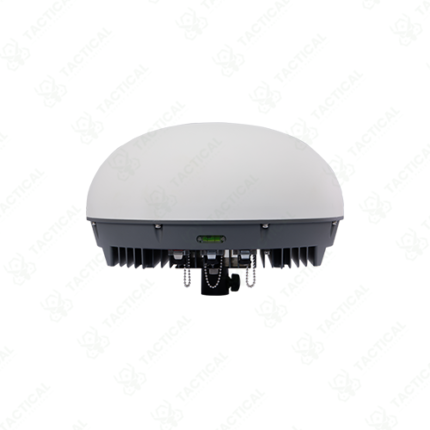
Navigation Spoofing
Navigation spoofing is an electronic attack technique that transmits counterfeit GNSS signals — replicating GPS, GLONASS, Galileo, or BeiDou satellite transmissions — at power levels sufficient to override genuine satellite signals at a target receiver, causing the receiver to calculate a false position, altitude, velocity, or time value. Unlike jamming, which denies navigation by signal overpowering, spoofing replaces genuine signals with fabricated ones the receiver accepts as legitimate — making the attack significantly harder to detect and more controllable in its outcome.
The attack mechanism works by generating synthetic satellite signals matching the pseudorandom noise (PRN) codes and navigation message structures of the target GNSS constellation. Software-defined radio (SDR) platforms run spoofing signal generators in software — producing multi-satellite, multi-constellation false signal environments on commodity hardware. Carry-off spoofing gradually shifts the false signals away from the genuine satellite positions — steering the receiver’s position solution in the desired direction without triggering sudden jump detections that receiver integrity monitoring would flag. Furthermore, coordinated multi-constellation spoofing simultaneously falsifies GPS, GLONASS, and BeiDou signals — defeating receivers that use cross-constellation consistency checks as a spoofing detection method.
Counter-UAS applications exploit navigation spoofing to defeat autonomous drones flying pre-programmed GPS waypoint missions without active control links. The spoofer feeds the drone’s GNSS receiver a false position — causing the autopilot to correct its flight path toward the false position rather than the true waypoint. This carry-off technique redirects the drone to a designated capture zone, forces a landing at a spoofed coordinate, or pushes the aircraft out of protected airspace without jamming its control link or generating debris. Additionally, spoofing power and coverage area adjust to contain the effect within the target area — minimizing disruption to legitimate navigation users outside the protected zone.
Anti-spoofing detection technologies include multi-antenna receiver arrays performing angle-of-arrival checks, signal strength anomaly monitoring, INS cross-referencing using inertial sensors independent of GNSS, and cryptographic authentication of military GPS P(Y) and M-code signals that civilian spoofing transmitters cannot replicate.
These capabilities apply directly to Pakistan Army electronic warfare programs, Pakistan Air Force counter-UAS airspace protection operations, PAEC nuclear facility perimeter defense, Pakistan Navy navigation security programs, and NESCOM defense research into GNSS vulnerability assessment and anti-spoofing system development across Pakistan’s contested electromagnetic environments.
Tactical Supply Pakistan supplies navigation spoofing systems and anti-spoofing detection equipment for counter-UAS operations, electronic warfare training, and GNSS security testing procurement across Pakistan.
Showing the single result