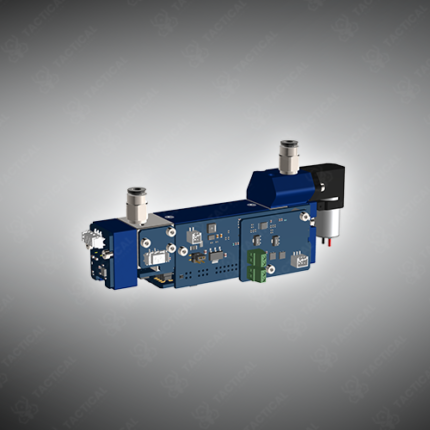
N2O Sensor
N2O sensors detect and measure nitrous oxide concentration in ambient air, clinical environments, and process gas streams — providing safety monitoring systems, anaesthesia equipment, and occupational exposure compliance instruments with continuous, accurate N2O readings across the concentration ranges relevant to each application.
Sensor technologies vary by required sensitivity, operating environment, and measurement range. Non-dispersive infrared (NDIR) sensors measure N2O through absorption at its characteristic 4.5 µm infrared wavelength — delivering continuous, cross-interference-resistant measurement at detection ranges from 0 to 100 ppm for occupational monitoring and 0 to 80% volume for anaesthesia circuit monitoring. Dual-wavelength NDIR designs add a reference channel that compensates for source aging, temperature drift, and cell contamination — maintaining calibration stability over multi-year service intervals. Furthermore, electrochemical N2O sensors use a three-electrode amperometric cell to oxidize N2O at a working electrode — generating a current proportional to N2O concentration at sensitivities suitable for occupational health monitoring at the 25 ppm TWA workplace exposure limit.
Photoacoustic infrared (PAIR) sensors detect N2O at sub-ppm concentrations by measuring pressure waves generated when modulated infrared light is absorbed by N2O molecules in a closed acoustic cell. These sensors achieve detection limits below 0.1 ppm — meeting the sensitivity requirements of operating theatre ambient air monitoring where personnel exposure must stay below occupational health threshold values during active anaesthesia delivery. Additionally, NDIR N2O sensors with integrated CO2 and O2 channels form multi-gas anaesthesia monitor modules — measuring all primary anaesthesia circuit gases simultaneously from a single compact sensor assembly in mainstream or sidestream configurations.
Fixed wall-mounted N2O monitors with 4–20mA analog output and relay alarm contacts integrate into building ventilation control systems — automatically activating exhaust fans and triggering alarms when N2O concentration in dental clinics and operating theatres crosses pre-set threshold values. Portable handheld units with LCD displays and data logging cover spot-check occupational exposure surveys and compliance audits across multiple clinical locations from a single instrument.
These sensors serve Pakistan’s CMH and teaching hospital anaesthesia departments, private hospital operating theatre safety compliance programs, dental clinic N2O sedation monitoring requirements, medical equipment manufacturers integrating N2O measurement into anaesthesia workstations, and occupational health compliance officers conducting workplace N2O exposure surveys across Karachi, Lahore, and Islamabad.
Tactical Supply Pakistan supplies N2O sensors for anaesthesia circuit monitoring, dental clinic occupational exposure compliance, and clinical environment N2O safety procurement across Pakistan.
Showing the single result