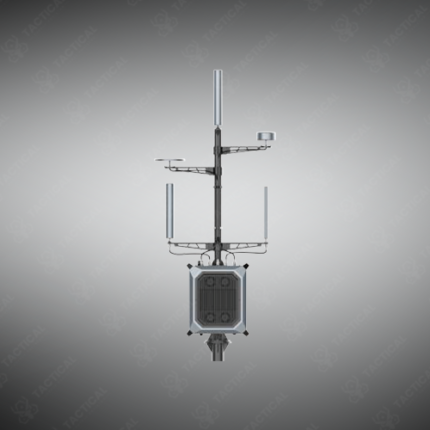
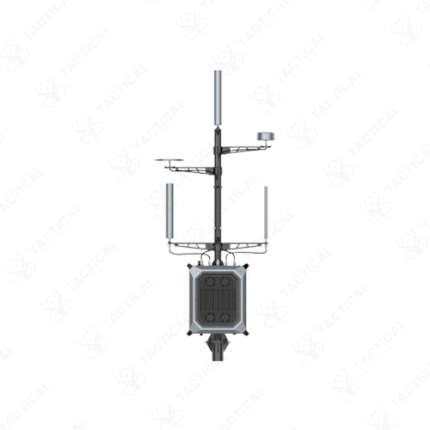
Multiple Frequency Antenna
A Multiple Frequency Antenna operates effectively across two or more distinct frequency bands using a single physical antenna structure, eliminating the need for separate dedicated antennas when a device or system must transmit or receive across multiple frequency ranges simultaneously or sequentially. Communication system designers and equipment integrators select multi-frequency antennas because consolidating frequency coverage into a single antenna reduces equipment footprint, installation complexity, and cost compared to deploying separate single-band antennas for each required frequency. Therefore, multi-band antenna design directly simplifies system integration wherever space, weight, or cost constraints limit the practical use of multiple separate antenna elements.
Antenna designers achieve multi-frequency operation through several engineering approaches, including geometrically scaled radiating elements that resonate at different frequencies, fractal antenna designs incorporating self-similar patterns that naturally support multiple resonant frequencies, and stacked or nested element configurations combining multiple antenna structures within a single physical housing. Furthermore, log-periodic antenna designs achieve particularly wide frequency coverage through a geometrically scaled series of dipole elements, each optimized for a different portion of the total frequency range the antenna covers.
Common multi-frequency applications include cellular communication antennas covering multiple network generations simultaneously, GPS antennas supporting multiple satellite constellation frequencies including GPS, GLONASS, and Galileo signals, and tactical radio antennas covering VHF and UHF bands within a single field-deployable unit. Consequently, application requirements determine which specific frequency bands a given multi-frequency antenna must cover, with antenna designers selecting the appropriate technique to achieve the required coverage without excessive performance compromise at any individual frequency.
Performance trade-offs typically exist between multi-frequency coverage breadth and the gain or efficiency achievable at each individual covered frequency, since optimizing an antenna structure for one frequency often involves design choices that compromise performance at other frequencies the antenna must also support. Additionally, impedance matching network design becomes more complex for multi-frequency antennas, requiring careful engineering to maintain acceptable performance across all intended operating frequencies.
In Pakistan, multiple frequency antennas serve telecommunications infrastructure, military communication systems, and GPS navigation equipment manufacturing requiring consolidated multi-band coverage. Tactical Supply Pakistan supplies Multiple Frequency Antennas for telecommunications and defense procurement across Pakistan.
Showing the single result