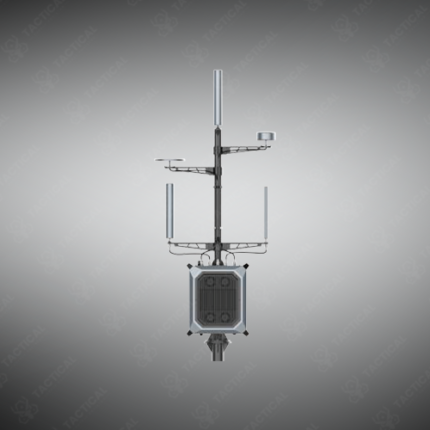
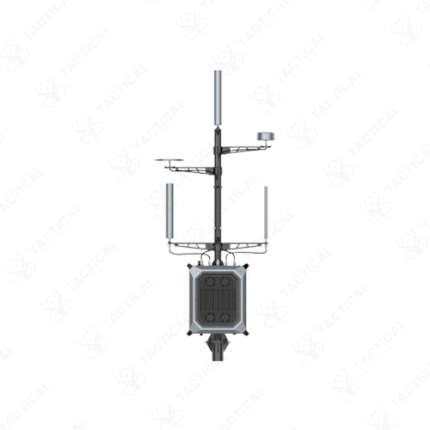
Multi-Mode Antenna System
Multi-mode antenna systems support simultaneous or switchable operation across multiple radiation patterns, polarization states, and frequency bands from a single antenna platform — giving communications, radar, and electronic warfare systems the flexibility to adapt their antenna characteristics to changing operational requirements without swapping hardware or repositioning physical antenna elements.
Mode switching on multi-mode antennas changes the radiation pattern, polarization, or frequency coverage through electronic reconfiguration rather than mechanical movement. PIN diode switches, RF MEMS switches, and varactor tuning elements alter current distribution on the antenna structure — selecting between omnidirectional, directional, sector, and null-steered patterns in microseconds. Furthermore, pattern reconfiguration allows tactical radio systems to switch from omnidirectional broadcast mode for base area communications to directional mode for long-range point-to-point links without relocating the antenna or changing radio hardware. This significantly reduces the antenna’s detectable electromagnetic signature in directional mode — a critical low-probability-of-intercept (LPI) characteristic for military communications systems operating in contested electromagnetic environments.
Polarization-reconfigurable multi-mode antennas switch between vertical, horizontal, right-hand circular (RHCP), and left-hand circular (LHCP) polarization states — matching polarization to the incoming signal for maximum link margin on satellite communications, GNSS reception, and radar cross-section reduction applications. Additionally, frequency-reconfigurable multi-mode systems use tunable matching networks and variable reactive elements to shift resonant frequency across HF, VHF, UHF, and L-band ranges from a single antenna element — eliminating the separate antenna installations that fixed-frequency designs require on multi-band radio platforms.
MIMO multi-mode antenna arrays combine spatial multiplexing with pattern diversity — simultaneously transmitting independent data streams from the same aperture using orthogonal radiation modes. This increases spectral efficiency on 4G LTE, 5G NR, and military wideband data link systems operating in bandwidth-limited channels. Antenna management units (AMU) on advanced systems automate mode selection based on link quality measurements — continuously optimizing antenna configuration for maximum data throughput or minimum intercept probability depending on the operational priority setting.
These systems serve Pakistan Army tactical radio network modernization programs, Pakistan Air Force ground-to-air communication infrastructure, Pakistan Navy vessel communication system upgrades, Pakistan Aeronautical Complex UAV communication link development, and NESCOM defense electronics programs requiring adaptive, multi-mode antenna capability for military communications and electronic warfare platforms across Pakistan’s diverse operational environments.
Tactical Supply Pakistan supplies multi-mode antenna systems for military tactical communications, electronic warfare, satellite links, and UAV communication procurement across Pakistan.
Showing the single result