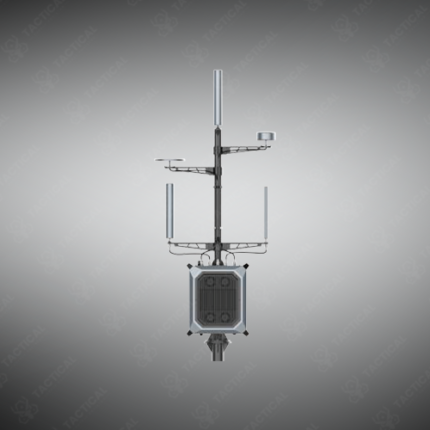
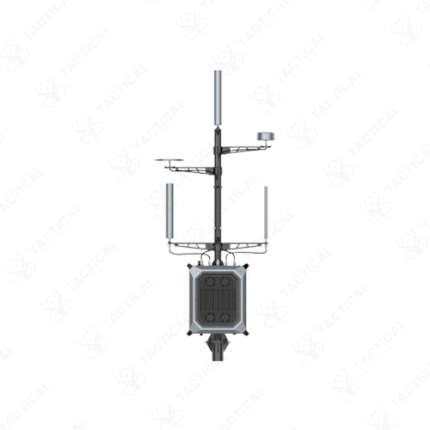
Multi-Constellation Full-Band Antenna
Multi-constellation full-band antennas receive signals from all major global navigation satellite systems simultaneously — GPS, GLONASS, Galileo, BeiDou, NavIC, and QZSS — across their complete operational frequency bands including L1, L2, L5, E1, E5, B1, B2, and B3. These antennas give GNSS receivers access to the maximum available satellite count at any location, improving positioning accuracy, availability in challenging environments, and resilience against single-constellation signal denial.
Full-band coverage distinguishes these antennas from single-frequency or dual-frequency designs. L1/E1/B1 frequencies around 1575.42MHz carry civilian ranging codes on GPS, Galileo, and BeiDou. L2 at 1227.60MHz and L5/E5/B2 around 1176.45MHz carry secondary ranging signals used in dual-frequency ionospheric correction — reducing positioning error from ionospheric delay from several meters to centimeter level when both frequencies are processed together. Furthermore, simultaneous coverage of all bands from a single antenna element ensures the receiver can use every available signal from every visible satellite — maximizing the satellite geometry that determines positioning dilution of precision (PDOP) values at any given moment.
Antenna element designs for full-band multi-constellation operation use stacked patch, helix, or choke ring configurations. Stacked patch antennas place multiple resonant patch elements at different heights above the ground plane — each patch tuned to a different frequency cluster. Choke ring antennas surround the central patch with concentric metallic rings that suppress multipath signals arriving from low elevation angles — used in geodetic reference stations, survey base stations, and precision agricultural receivers where multipath error reduction directly affects positioning accuracy. Additionally, low-profile survey-grade antennas such as the Trimble Zephyr 3 and Leica AS10 achieve phase center stability below 0.5mm across all bands and azimuth angles — providing the consistent electrical reference point that high-accuracy RTK and PPP positioning algorithms require.
Active antenna versions integrate a low-noise amplifier (LNA) at the feed point — boosting weak satellite signals before cable losses reduce signal-to-noise ratio at the receiver input. Noise figures on professional active antennas reach 1.5dB or below. IP67 and IP68 housing ratings protect outdoor survey, marine, and vehicle-mounted installations across Pakistan’s full climate range.
These antennas serve Pakistan Army precision navigation and artillery survey programs, Survey of Pakistan geodetic reference network infrastructure, Pakistan Aeronautical Complex UAV navigation system development, precision agriculture GPS guidance system integrators in Punjab, and civil engineering survey contractors requiring full-constellation GNSS signal reception for RTK and PPP positioning applications across Pakistan.
Tactical Supply Pakistan supplies multi-constellation full-band antennas for precision survey, military navigation, UAV guidance, and precision agriculture GNSS applications procurement across Pakistan.
Showing the single result