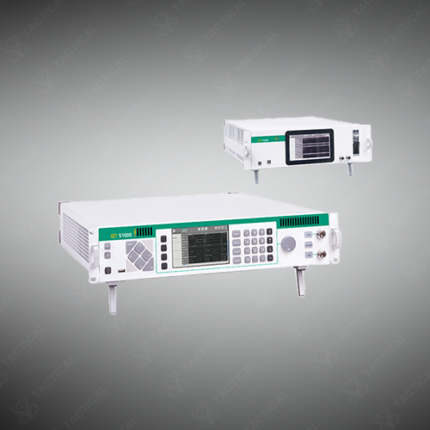
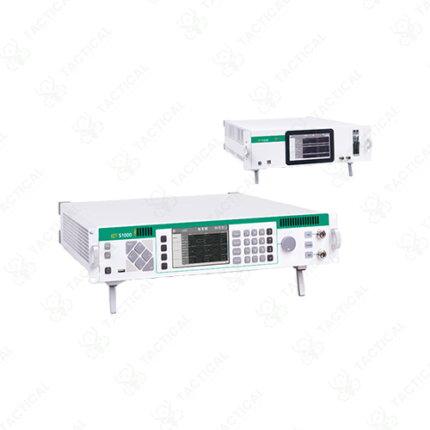
Multi-Channel Function Generator
Multi-channel function generators produce simultaneous, independently configurable electrical waveforms across two or more output channels — providing test engineers, electronics researchers, and calibration laboratories with synchronized or phase-offset signal sources for component characterization, circuit testing, sensor simulation, and automated test system integration from a single instrument.
Output waveform types across professional multi-channel function generators include sine, square, triangle, ramp, pulse, noise, DC offset, and arbitrary waveforms stored in onboard memory. Frequency range covers DC to 160MHz on mid-range instruments and extends to 1GHz and above on RF signal generator variants. Amplitude range typically spans 1mV to 10Vpp into 50-ohm loads, with high-impedance output levels doubling to 20Vpp. Furthermore, arbitrary waveform generation (AWG) capability allows users to define custom waveforms point-by-point — storing up to 16 million points per channel at sample rates up to 1GSa/s on high-specification models such as the Keysight 33622A and Rigol DG992. These custom waveforms replicate real-world sensor outputs, communication preambles, power supply transients, and biological signals for hardware-in-the-loop testing scenarios.
Channel synchronization modes include independent operation, channel-tracking where CH2 mirrors CH1 parameters with offset, phase-coupled output maintaining a defined phase relationship between channels, and burst mode triggering both channels from a common external trigger source. Phase offset adjustment between channels covers 0 to 360 degrees in 0.001-degree steps — enabling precise differential signal simulation for ADC testing, power amplifier characterization, and quadrature signal generation for IQ modulator testing. Additionally, frequency sweep and AM/FM/PM/PWM modulation modes on all channels simultaneously support communications system testing, radar signal simulation, and electromechanical actuator drive waveform generation.
Output impedance on standard channels is 50 ohms with BNC connectors. USB, LAN (LXI), and GPIB interfaces enable remote control and waveform transfer from PC-based test automation software including LabVIEW, MATLAB, and Python instrument control libraries.
These instruments serve Pakistan’s defense electronics testing programs at NESCOM and SUPARCO, university electronics and electrical engineering laboratories in Lahore and Karachi, pharmaceutical and industrial sensor calibration facilities, Pakistan Ordnance Factories electronics quality control departments, and commercial electronics repair and development workshops requiring precise multi-channel signal generation for component and system-level testing.
Tactical Supply Pakistan supplies multi-channel function generators for electronics testing, sensor simulation, defense system calibration, and laboratory research procurement across Pakistan.
Showing the single result