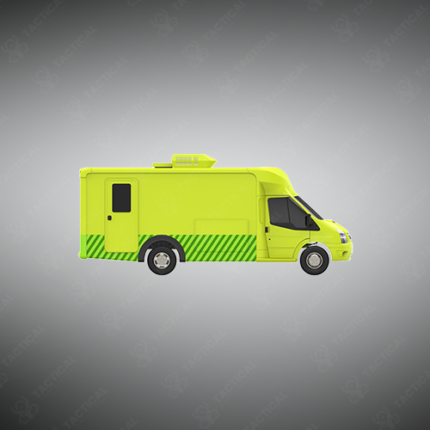
Mobile Laboratory
A Mobile Laboratory is a self-contained, transportable facility equipped with scientific instruments and infrastructure to perform analytical testing, diagnostic procedures, or research activities at locations away from fixed laboratory buildings. Disaster response organizations and field research teams deploy mobile laboratories because certain testing and analysis requirements arise at locations where transporting samples to a distant fixed facility would introduce unacceptable delay or sample degradation risk. Therefore, on-site analytical capability directly determines response speed for time-sensitive testing applications including outbreak investigation and environmental contamination assessment.
The laboratory structure typically uses a converted shipping container, purpose-built trailer, or modified vehicle chassis, providing a weatherproof, climate-controlled enclosure that protects sensitive instruments and reagents from temperature extremes and environmental contamination during field deployment. Furthermore, internal layout design separates the available space into functional zones supporting the specific testing workflow the laboratory addresses, whether that involves chemical analysis, microbiological testing, or molecular diagnostic procedures.
Power systems typically combine connection to local electrical grid infrastructure where available with backup generator or battery systems, ensuring continuous instrument operation regardless of local utility reliability at the deployment location. Consequently, power system redundancy becomes particularly important for sensitive analytical instruments requiring stable, uninterrupted power during extended measurement or amplification procedures.
Equipment selection within mobile laboratories balances the desired analytical capability against the physical space, power, and stability constraints the mobile platform imposes, often requiring specialized compact or ruggedized instrument variants compared to equivalent fixed laboratory equipment. Additionally, sample storage and transport infrastructure, including refrigeration and biosafety containment where required, maintains sample integrity from field collection through laboratory analysis within the same mobile unit.
Deployment readiness typically requires only basic site preparation and utility connection, allowing the laboratory to become operational within hours of arrival at a new testing location rather than the weeks or months required to establish equivalent fixed laboratory capability.
In Pakistan, mobile laboratories serve disaster response operations, public health disease surveillance programs, environmental monitoring agencies, and field research expeditions requiring on-site analytical capability. Tactical Supply Pakistan supplies Mobile Laboratories for public health, environmental, and research procurement across Pakistan.
Showing the single result