Miniature Optical Spectrometers
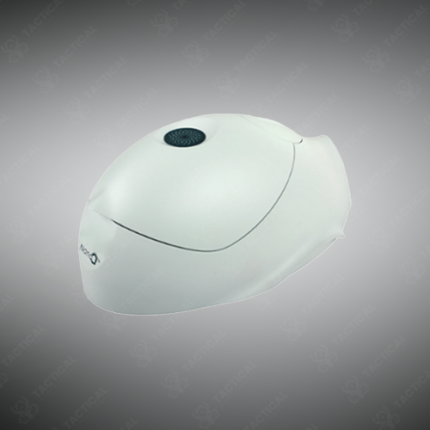
Miniature Optical Spectrometers measure the spectral composition of light across visible, ultraviolet, or near-infrared wavelength ranges within compact instrument housings that fit into handheld devices, integrated sensor systems, and space-constrained laboratory setups where conventional benchtop spectrometers prove impractical. Quality control engineers and field researchers select miniature spectrometers because portable spectral analysis capability often must operate at the point of measurement rather than requiring sample transport to a fixed laboratory instrument. Therefore, instrument size reduction directly expands where and how spectral measurement capability can be deployed.
The optical design typically uses a fixed diffraction grating combined with a linear detector array, eliminating the moving parts that conventional scanning spectrometers require and substantially reducing both instrument size and mechanical complexity. Furthermore, this fixed-grating architecture captures the entire spectral range simultaneously across the detector array rather than scanning wavelength by wavelength, enabling faster measurement acquisition within the miniaturized form factor.
Detector technology commonly uses CCD or CMOS linear arrays containing several hundred to several thousand individual pixel elements, with each pixel corresponding to a specific narrow wavelength band across the instrument’s total measurement range. Consequently, detector array resolution directly determines the spectrometer’s wavelength resolution capability, with higher pixel counts generally providing finer spectral resolution within the same overall wavelength range.
Fiber optic input coupling allows miniature spectrometers to receive light from remote sampling probes, enabling measurement at locations physically separated from the spectrometer electronics itself. Additionally, USB connectivity to a connected computer or mobile device handles data processing and display functions, since the miniature spectrometer module itself typically lacks the onboard processing power and display screen that standalone benchtop instruments include.
Wavelength range coverage varies by model, with dedicated UV, visible, and near-infrared versions available depending on the target application’s spectral region of interest, from material identification to fluorescence measurement to color analysis tasks.
In Pakistan, miniature optical spectrometers serve quality control laboratories, agricultural product analysis, pharmaceutical raw material verification, and university optics research programs requiring portable spectral measurement capability. Tactical Supply Pakistan supplies Miniature Optical Spectrometers for industrial, agricultural, and research procurement across Pakistan.
Showing the single result