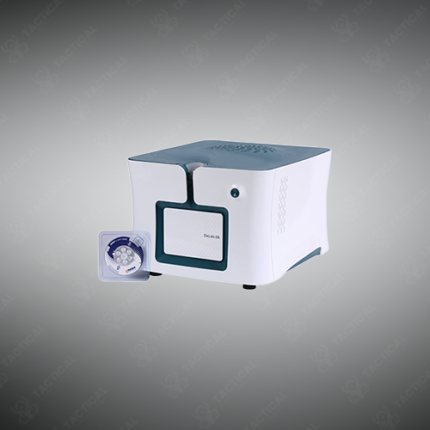
Microfluidic
Description:
Microfluidic technology manipulates small fluid volumes, typically in the nanoliter to microliter range, through precisely engineered channels and chambers fabricated at micrometer scale, enabling laboratory processes including mixing, separation, and chemical reaction to occur within compact, often disposable chip formats. Researchers and diagnostic developers adopt microfluidic platforms because the small scale dramatically reduces reagent consumption, reaction time, and sample volume requirements compared to conventional benchtop laboratory equipment. Therefore, microfluidic miniaturization directly translates into cost savings and faster turnaround times across many laboratory and diagnostic applications.
Channel fabrication uses photolithography techniques borrowed from semiconductor manufacturing, etching precise channel patterns into silicon, glass, or polymer substrates including polydimethylsiloxane (PDMS), a flexible elastomer widely used for rapid prototyping due to its ease of molding and optical transparency. Furthermore, channel dimensions typically range from 10 to 500 micrometers in width and depth, with fluid flow at this scale dominated by laminar flow physics rather than the turbulent flow common in larger-scale fluid systems.
Fluid movement through microfluidic channels occurs via several driving mechanisms, including pressure-driven flow from external pumps, electrokinetic flow using applied electric fields to move charged particles and fluids, and capillary action that draws fluid through channels without external power input. Consequently, device designers select the appropriate flow mechanism based on the required flow rate precision, power availability, and target application requirements.
Integrated functional elements within microfluidic chips include mixing structures that combine reagent streams, valves that control flow timing and direction, and detection zones incorporating optical or electrochemical sensing for real-time analysis. Additionally, droplet-based microfluidics generates discrete water-in-oil droplets serving as individual reaction vessels, supporting applications including digital PCR and single-cell analysis.
In Pakistan, microfluidic technology serves university bioengineering and chemistry research departments, diagnostic device development programs, and pharmaceutical research facilities developing point-of-care testing platforms. Tactical Supply Pakistan supplies microfluidic devices and components for research, diagnostic, and pharmaceutical laboratory procurement across Pakistan.
Showing the single result