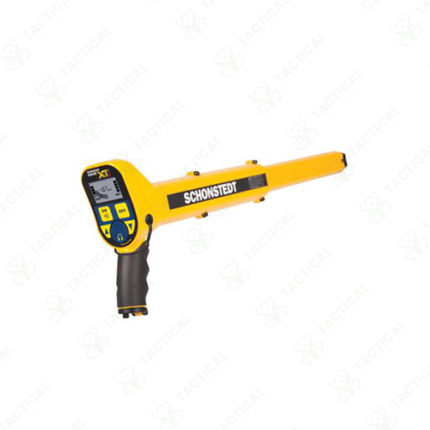
Metal and Magnetic Locators
Description:
Metal and magnetic locators are handheld detection instruments that identify buried or concealed ferrous and non-ferrous metallic objects through electromagnetic induction or magnetic field sensing. These tools serve utility location, archaeology, security screening, treasure hunting, and EOD clearance across a wide range of detection depth and sensitivity requirements.
Metal detectors generate an alternating electromagnetic field from a transmit coil in the search head. When this field contacts a metallic object, eddy currents form on the object’s surface and generate a secondary field. The receive coil detects this secondary field and signals the operator through an audible tone or visual display. Very low frequency (VLF) detectors operate at fixed frequencies between 3kHz and 100kHz — lower frequencies penetrate deeper for large targets while higher frequencies improve sensitivity to small shallow objects. Furthermore, pulse induction (PI) detectors transmit short high-power pulses rather than continuous waves, making them highly resistant to soil mineralization effects. They detect deeply buried objects that VLF detectors miss in mineralized ground — directly applicable to Pakistan’s iron-rich soils in KPK and Balochistan where ground balance limitations affect standard VLF performance.
Multi-frequency detectors transmit several frequencies simultaneously — combining deep penetration with small target sensitivity in a single search mode without manual frequency switching. Target identification systems analyze the conductivity and inductance signature of detected objects, displaying a numeric target ID and category on screen. This allows operators to accept or reject targets before digging, improving productivity on high-clutter sites. Additionally, magnetic locators use fluxgate or Hall-effect sensors to detect ferrous objects specifically — ignoring non-ferrous metals entirely. This makes them the standard tool for locating iron survey markers, steel manhole covers, buried valves, and ferrous utility infrastructure without false signals from aluminum or copper debris.
Detection depth varies by object size and soil conditions. A standard 60mm artillery shell detects at depths of 0.5 to 1 meter with a VLF detector. Larger ferrous targets like vehicle frames and buried drums detect to 3 meters or beyond with magnetic locators in favorable soil conditions.
These instruments serve Pakistan Army EOD UXO clearance teams, WASA utility location crews in Lahore and Karachi, construction contractors locating buried infrastructure across Punjab, customs security screening teams, and archaeological survey programs investigating Indus Valley and Gandhara heritage sites across Pakistan.
Tactical Supply Pakistan supplies metal and magnetic locators for EOD clearance, utility location, security screening, and archaeological survey procurement across Pakistan.
Showing the single result