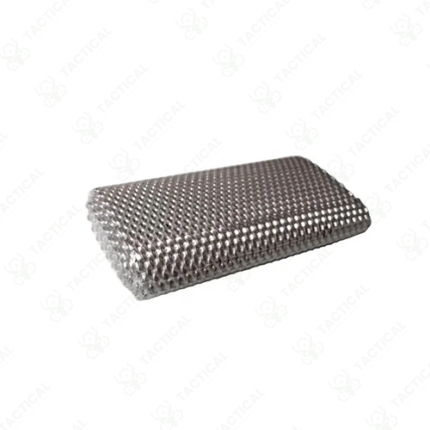
Mesh Wire Splint
Mesh wire splints immobilize fractures, sprains, and soft tissue injuries in pre-hospital, combat, and emergency field settings. They conform to any body part on application. As a result, they adapt to limb contours, irregular shapes, and pediatric patients without rigid fixed geometry.
Each splint uses a lightweight aluminum wire mesh core. Two layers of closed-cell foam padding laminate on either side. Operators shape the splint directly over the injured limb without tools or water. They bend, fold, and trim it with standard scissors to match the exact contour needed. Once shaped, the aluminum mesh holds its position firmly. It does not spring back during patient transport. Moreover, the foam padding protects skin from wire contact and adds cushioning that reduces pressure point discomfort during extended wear.
Standard splints measure 11cm × 91cm flat — covering adult forearm, wrist, ankle, and lower leg injuries. Operators fold them to double thickness for increased rigidity on larger joints. Pediatric sizes at 7cm × 56cm cover smaller limbs without excess bulk. Additionally, these splints are fully radiolucent. X-ray beams pass through without artifact, allowing imaging without removal. Furthermore, splints remain functional when wet — useful during Pakistan’s monsoon season, flood disaster response, and northern river crossing scenarios.
Each adult splint weighs approximately 86 grams. They roll compactly into trauma kits, military aid bags, and ambulance jump bags. Single-use design prevents cross-contamination in mass casualty scenarios.
These splints serve Pakistan Army Regimental Medical Officers, SSG combat medic teams, Rescue 1122 paramedic units, and CMH emergency departments across Karachi, Lahore, and Islamabad.
Tactical Supply Pakistan supplies mesh wire splints for military trauma care, pre-hospital fracture immobilization, and emergency medical equipment procurement across Pakistan.
Showing the single result