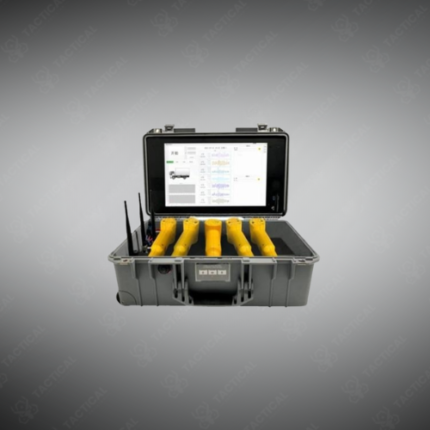
MDS (movement detection system)
Movement detection systems (MDS) identify and alert on the presence of unauthorized motion within a defined monitored area — forming the active detection layer of perimeter security, facility protection, and surveillance architectures. These systems range from single-sensor passive infrared detectors covering an individual room to networked multi-technology arrays monitoring large outdoor perimeters across military installations, critical infrastructure, and border surveillance positions.
Passive infrared (PIR) sensors detect changes in infrared radiation caused by a warm body moving through the detection zone — covering areas from 6 meters on compact indoor units to 20 meters and beyond on long-range outdoor models with focused Fresnel lens arrays. Dual-technology detectors combine PIR with microwave Doppler sensing — requiring simultaneous confirmation from both technologies before triggering an alarm. This dual-confirmation approach reduces false alarms from air conditioning drafts, small animals, and thermal gradients in outdoor environments. Furthermore, microwave motion detectors use continuous wave radar to detect Doppler frequency shifts caused by moving objects — penetrating thin non-metallic walls and detecting motion in areas where PIR sensors have line-of-sight limitations.
Video analytics-based movement detection uses AI algorithms running on IP camera feeds to identify pixel-level changes caused by movement — classifying targets as human, vehicle, or animal to reduce nuisance alarms before alerting operators. These systems cover large outdoor areas from single camera positions at ranges exceeding 100 meters. Additionally, ground sensors using seismic and acoustic detection technologies identify footstep vibrations and vehicle movement transmitted through soil — deployed along fence lines, approach paths, and border crossing points where above-ground sensors would be visible to intruders.
Fiber optic perimeter sensing cables detect microbend-induced signal changes caused by physical contact, climbing, or cutting along the full cable length — covering hundreds of meters from a single detection module without active electronics at field positions. Output interfaces include dry relay contacts for alarm panel integration, RS-485 Modbus for building management systems, and IP network connectivity for integration into PSIM and CCTV management platforms.
These systems serve Pakistan Army forward operating base perimeter security, PAEC nuclear facility protection, Karachi Port Trust infrastructure monitoring, corporate campus security across Lahore and Islamabad, and Pakistan Rangers border surveillance positions requiring reliable automated motion detection across large, unattended perimeter areas.
Tactical Supply Pakistan supplies movement detection systems for military perimeter security, critical infrastructure protection, and facility surveillance procurement across Pakistan.
Showing the single result