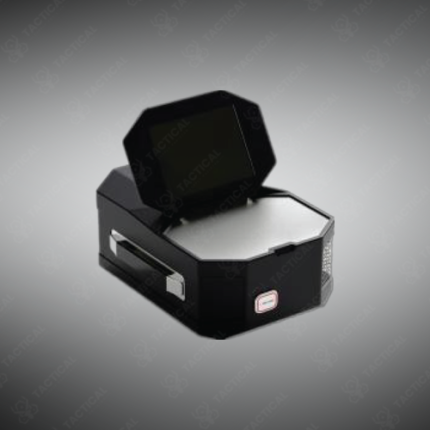
Mass Spectrometry
Mass spectrometry measures the mass-to-charge ratio of ionized molecules and atoms — generating a spectrum that identifies the chemical composition, molecular structure, and concentration of substances in a sample with accuracy and sensitivity that no other analytical technique matches at trace levels. These instruments serve pharmaceutical quality control, forensic evidence analysis, environmental monitoring, food safety testing, clinical diagnostics, and defense chemical detection across laboratory and field-deployable configurations.
The measurement process begins with ionization — converting sample molecules into charged ions using electrospray ionization (ESI) for biological and pharmaceutical samples, atmospheric pressure chemical ionization (APCI) for small molecules, electron ionization (EI) for volatile organic compounds in gas-phase samples, or matrix-assisted laser desorption ionization (MALDI) for large biomolecules including proteins and nucleic acids. Ions then enter the mass analyzer, which separates them by mass-to-charge ratio using electric and magnetic fields. Quadrupole analyzers filter ions at defined mass windows for targeted quantitative analysis. Time-of-flight (TOF) analyzers measure ion flight time across a field-free region — delivering high-resolution full-spectrum data from a single measurement. Furthermore, ion trap, Orbitrap, and Fourier transform ion cyclotron resonance (FTICR) analyzers deliver mass resolving powers above 100,000 for high-confidence molecular formula assignment in unknown compound identification.
Triple quadrupole (QqQ) instruments combine two mass-selecting quadrupoles with a collision cell — enabling selected reaction monitoring (SRM) and multiple reaction monitoring (MRM) for highly specific quantitative detection of target compounds at picogram per milliliter concentrations in complex matrices. These configurations drive pharmaceutical pharmacokinetics studies, forensic drug screening, doping control, and environmental contaminant quantification. Additionally, portable and field-deployable mass spectrometers including ion trap and miniaturized TOF systems detect chemical warfare agents, toxic industrial chemicals, and explosive compounds at parts-per-billion concentrations in under 30 seconds — deployed at border checkpoints, disaster response operations, and military CBRN reconnaissance missions.
Gas chromatography-mass spectrometry (GC-MS) and liquid chromatography-mass spectrometry (LC-MS) coupling separates complex mixture components before mass analysis — enabling identification and quantification of hundreds of compounds simultaneously from a single sample injection in forensic, environmental, and pharmaceutical applications.
These instruments serve Pakistan’s Punjab Forensic Science Agency and FIA forensic laboratories, pharmaceutical quality control departments in Karachi and Lahore, PCSIR analytical research centers, hospital clinical toxicology units, Pakistan Customs narcotics detection programs, and university chemistry research departments requiring high-sensitivity chemical identification and quantification capability.
Tactical Supply Pakistan supplies mass spectrometry instruments for forensic analysis, pharmaceutical QC, environmental monitoring, and defense chemical detection procurement across Pakistan.
Showing the single result