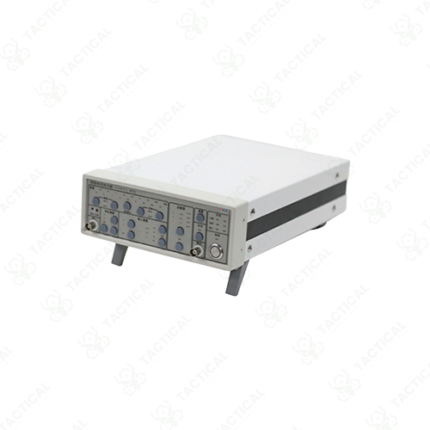
Low Power Amplifiers
Low Power Amplifiers boost weak radio frequency, audio, or signal-level electrical inputs to a usable output level while operating within a defined low power range, typically below 1 watt for RF applications, serving applications where signal strength enhancement matters more than high-power transmission capability. Communication system designers, sensor network engineers, and instrumentation developers select low power amplifiers because many signal processing chains require gain stages that condition signals without the cost, heat, and power consumption penalties of high-power amplifier stages. Therefore, low power amplifier selection directly affects overall system efficiency and battery life in portable and embedded applications.
RF low power amplifiers typically operate across frequency ranges spanning HF through microwave bands, with gain specifications between 10dB and 30dB depending on the specific amplifier stage and application requirement. Furthermore, low noise amplifier (LNA) variants prioritize minimal added noise figure — often below 1dB — for receiver front-end applications where preserving signal-to-noise ratio matters more than raw gain. Consequently, LNA placement immediately after the antenna in a receiver chain determines the overall system noise floor more than any subsequent amplification stage.
Power amplifier classes for low power applications include Class A for linearity-critical applications, Class AB for a balance of efficiency and linearity, and Class C or D for maximum efficiency at the cost of signal distortion in applications tolerating non-linear output. Additionally, integrated circuit packaging on modern low power amplifier modules combines the active gain stage, matching networks, and bias circuitry into a single surface-mount component, simplifying circuit board integration significantly compared to discrete component designs.
Operating voltage ranges from 1.8V to 12V on most low power amplifier modules, suiting battery-powered and embedded system applications. Moreover, thermal management requirements remain minimal compared to high-power amplifier stages, often eliminating the need for heat sinks or active cooling in low power designs.
In Pakistan, low power amplifiers serve telecommunications equipment manufacturing, sensor network development, GPS and navigation receiver design, and university electronics research programs developing RF and signal processing circuits. Tactical Supply Pakistan supplies Low Power Amplifiers for telecommunications, defense electronics, and research procurement across Pakistan.
Showing the single result