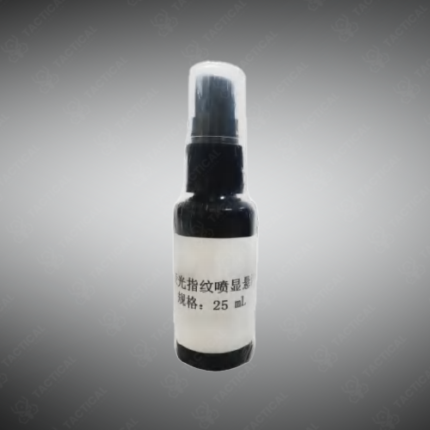
Latent Fingerprint Development
Latent fingerprint development transforms invisible friction ridge deposits into visible or fluorescent marks suitable for photography, comparison, and biometric database matching. Development method selection depends on the surface type, environmental exposure history, and deposit age — no single technique works across all substrates, so forensic examiners sequence multiple methods to maximize recovery rate without destroying evidence for subsequent processing steps.
Porous surface development targets paper, cardboard, untrested wood, and raw fabric where fingerprint residue absorbs into the substrate. Ninhydrin reacts with amino acids in sweat residue to produce a purple Ruhemann’s product visible under white light — standard for document examination in heated humid conditions. DFO applied before ninhydrin generates a fluorescent derivative detectable at lower deposit concentrations under 473nm or 532nm laser illumination. 1,2-Indanedione-zinc produces stronger fluorescence than DFO on aged or environmentally challenged deposits.
Non-porous surface development covers glass, polished metal, plastic, lacquered wood, and coated paper. Cyanoacrylate fuming deposits a white poly-cyanoacrylate polymer on lipid components of fresh and aged prints. Basic Yellow 40, Rhodamine 6G, and Lumicyano fluorescent dye stains applied after fuming enhance prints for photography under 515nm to 532nm laser excitation. Vacuum metal deposition using sequential gold and zinc evaporation layers develops prints on polyethylene bags and clear plastic films at sensitivity levels that exceed all chemical reagents on these challenging substrates.
These methods, reagents, and instruments serve Pakistan’s Punjab Forensic Science Agency, FIA forensic laboratories, Counter Terrorism Department post-blast scene processing teams, and police fingerprint bureaus across Karachi, Lahore, Islamabad, and Peshawar conducting latent print development on evidence recovered from serious crime and terrorism scenes.
Tactical Supply Pakistan supplies latent fingerprint development reagents, powders, fuming systems, and optical instruments for forensic laboratory and crime scene evidence processing procurement across Pakistan.
Showing the single result