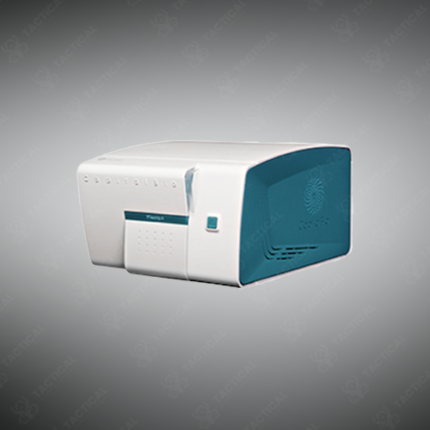
Integrated Nucleic Acid Analysis
Integrated nucleic acid analysis systems combine sample preparation, amplification, and detection into a single automated workflow — processing raw biological samples through to a quantitative DNA or RNA result without manual transfers between instruments. These platforms reduce hands-on time, lower contamination risk, and deliver faster time-to-result compared to conventional multi-step benchtop protocols that move samples across separate extraction, PCR, and detection instruments.
Sample inputs vary by platform and include whole blood, nasopharyngeal swabs, urine, saliva, tissue homogenates, and environmental swabs. Lysis modules use thermal, chemical, or bead-beating mechanisms to break open cells and release nucleic acid content. On-board solid-phase extraction cartridges or membrane-based purification modules then concentrate and purify the nucleic acid before it enters the amplification stage. Furthermore, closed-system cartridge designs keep the sample enclosed throughout — eliminating the open-tube pipetting steps where aerosol contamination most commonly occurs in standard PCR workflows.
Amplification methods integrated into these systems include real-time quantitative PCR (qPCR) using fluorescent probe chemistries such as TaqMan and SYBR Green, digital PCR (dPCR) partitioning samples into thousands of individual reaction droplets for absolute quantification without standard curves, and isothermal methods including LAMP and NEAR (Nicking Enzyme Amplification Reaction) that complete amplification at fixed temperatures in 15–20 minutes. Additionally, multiplexed detection capability allows simultaneous identification of multiple nucleic acid targets from a single cartridge — covering bacterial, viral, and genetic marker panels in one run.
Fully automated benchtop systems handle 1 to 96 samples per run with walk-away operation after loading. Point-of-care integrated units process single samples from swab to result in under 30 minutes, weighing under 5kg for field deployment. Moreover, next-generation sequencing (NGS) library preparation integration on high-throughput platforms automates fragmentation, end-repair, adapter ligation, and size selection in a single instrument run.
These systems serve Pakistan’s hospital infectious disease laboratories, forensic science divisions, military field medical units requiring rapid pathogen identification, pharmaceutical quality control departments, and university molecular biology research programs in Lahore, Karachi, Islamabad, and Peshawar.
Tactical Supply Pakistan supplies integrated nucleic acid analysis systems for clinical diagnostics, forensic DNA analysis, pathogen detection, and molecular research procurement across Pakistan.
Showing the single result