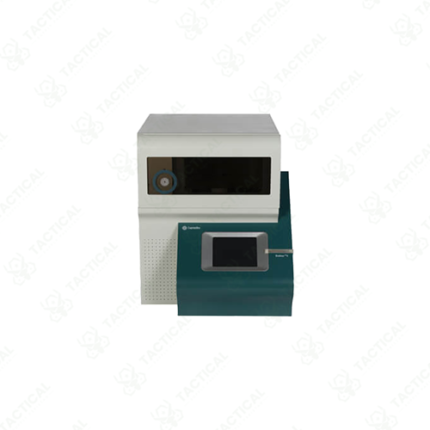
HYBRIDIZATION MICROARRAY STATION
A Hybridization Microarray Station is an automated laboratory instrument that controls the temperature, fluid mixing, and incubation conditions during the hybridization of labeled nucleic acid samples onto DNA, RNA, or protein microarray slides. Consistent hybridization conditions directly affect signal uniformity, background noise levels, and data reproducibility across microarray experiments. Therefore, automated stations replace manual hybridization chambers and water bath incubation methods that introduce operator variability and inconsistent mixing across the array surface.
The station holds one or more microarray slides within a sealed hybridization chamber. A heating element and temperature controller maintain the chamber at the programmed hybridization temperature — typically 42°C to 65°C depending on probe length, GC content, and buffer formulation. Furthermore, an active mixing mechanism — using rotating gaskets, oscillating chambers, or recirculating pump systems — continuously moves the hybridization solution across the array surface. Consequently, fresh labeled target reaches probe features throughout the incubation period, preventing depletion zones that reduce signal intensity at high-density array regions.
Incubation times range from 4 hours to 18 hours depending on target concentration, probe affinity, and the required detection sensitivity. The station’s programmable controller stores multiple hybridization protocols with independent temperature ramp rates, hold times, and mixing parameters for different array platforms. Additionally, some stations integrate automated wash steps after hybridization completion, reducing manual handling of fragile array slides between incubation and scanning.
Chamber humidity control prevents evaporation of small hybridization volumes — typically 15 to 100 microliters — during extended incubation periods. Moreover, multi-slide capacity versions process 4 to 12 arrays simultaneously, increasing throughput for large-scale gene expression studies or diagnostic screening programs.
In Pakistan, hybridization microarray stations serve university genomics and molecular biology research departments, agricultural biotechnology crop trait analysis programs, pharmaceutical drug target discovery facilities, and hospital molecular pathology departments conducting chromosomal microarray analysis for genetic disorder diagnosis. Tactical Supply Pakistan supplies Hybridization Microarray Stations for genomics, diagnostic, and research laboratory procurement across Pakistan.
Showing the single result