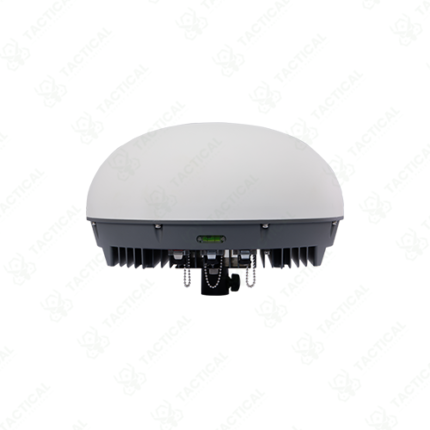
GPS Spoofer
A GPS spoofer is a radio frequency transmission device that generates counterfeit GNSS signals mimicking authentic satellite broadcasts to deceive a GPS receiver into calculating a false position, velocity, or time output. Unlike GPS jammers that simply overpower legitimate satellite signals with broadband noise to deny positioning capability, a spoofer transmits structured false signals that the target receiver processes as genuine satellite data, causing it to report an incorrect location or time without triggering the signal-loss alarms that jamming would activate. This makes spoofing a significantly more sophisticated form of GNSS interference with broader implications for navigation-dependent systems.
Spoofing systems require precise knowledge of the target receiver’s current position and the authentic satellite signal structure to generate convincing counterfeit signals across the L1 1575.42 MHz GPS frequency and optionally L2 and L5 bands. Effective spoofing gradually shifts the false position output rather than instantaneously relocating the receiver, reducing the likelihood of detection by receiver integrity monitoring systems. Software-defined radio platforms are commonly used as the transmission hardware due to their frequency agility and signal generation flexibility.
GPS spoofing has documented operational relevance in electronic warfare, UAV navigation defeat, maritime vessel misdirection, and timing system disruption affecting telecommunications and financial transaction networks. Detection and anti-spoofing measures include multi-antenna receivers, signal authentication protocols, and inertial navigation cross-referencing.
In Pakistan, awareness of GPS spoofing threats is relevant to military navigation system integrity, critical infrastructure timing protection, UAV operational security, and border surveillance system resilience against adversarial electronic warfare activities.
Tactical Supply Pakistan provides GPS anti-spoofing detection equipment and GNSS resilience solutions for defense, infrastructure, and security operators requiring protected navigation across Pakistan.
Showing the single result