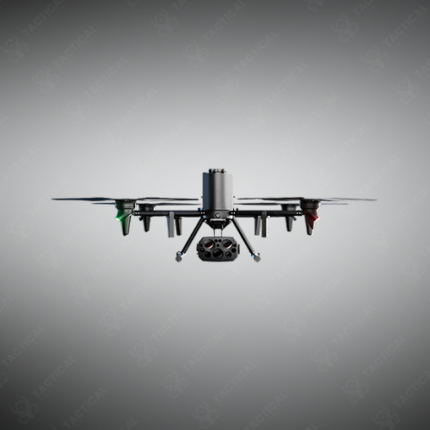
Drone as First Responder (DFR) Drones & UAVs
Drone as first responder (DFR) drones and unmanned aerial vehicles (UAVs) are autonomous or remotely-operated platforms deploying medical supplies, emergency equipment, or surveillance capability to disaster sites or medical emergencies enabling rapid lifesaving intervention before ground-based first responders arrive. The aerial platform approach enables rapid medical response across terrain or distance barriers preventing ground vehicle access.
Premium DFR UAVs employ multirotor configurations (quadcopters, hexacopters) providing stable hover capability essential for precise equipment delivery. Payload capacity typically spans 1–5 kilograms enabling delivery of automated external defibrillators (AEDs), rescue equipment, or emergency medical supplies. GPS/GNSS positioning enables autonomous flight to known emergency coordinates without continuous operator control.
Operational deployment includes medical emergency response delivering AEDs enabling early defibrillation during out-of-hospital cardiac arrest, disaster response delivering supplies to isolated survivors, and hazardous material response delivering remote sensing equipment assessing environmental hazards before personnel exposure. Rapid deployment (launch to site in 2–5 minutes) enables response faster than ground vehicles navigating traffic and terrain.
Communication integration enables operators coordinating with ground responders ensuring coordinated response. Video transmission provides situational awareness enabling dispatch optimisation. Integration with emergency services databases enables automatic response trigger upon emergency notification.
Regulatory considerations in Pakistan require coordination with civil aviation authority and operational approval before emergency deployment.
In Pakistan, DFR drones support emergency medical and disaster response operations.
Tactical Supply Pakistan supplies drone-as-first-responder systems for emergency response applications.
Showing the single result