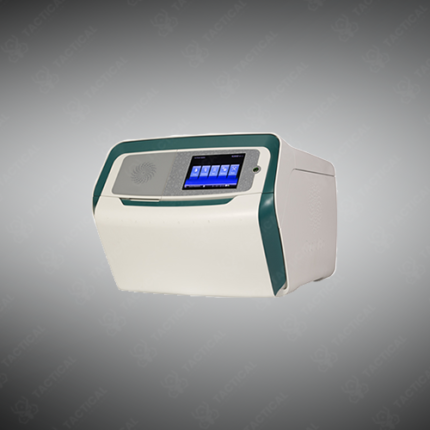
DNA Sequencer Machine
A DNA sequencer machine is a laboratory analytical instrument determining the precise sequence of nucleotides (adenine, guanine, cytosine, thymine) comprising DNA molecules enabling forensic identification, disease mutation detection, and microbial characterisation. The sequencing capability provides genetic information at maximum resolution enabling definitive individual identification and genetic diagnosis.
Premium DNA sequencer machines employ Sanger sequencing through automated capillary electrophoresis or next-generation sequencing (NGS) employing massive parallel analysis of millions of DNA fragments simultaneously. Sanger sequencing achieves read lengths 600–1000 base pairs with accuracy >99.9% suitable for targeted genetic analysis. NGS platforms achieve millions of reads simultaneously enabling comprehensive genome coverage at lower cost per base pair.
Operational procedures involve DNA sample preparation, library construction fragmenting DNA into appropriately-sized pieces, sequencing reaction amplifying fragments with fluorescently-labelled nucleotides, and automated data collection translating fluorescent intensity patterns into genetic sequence. Real-time analysis enables progressive result reporting without requiring complete sequencing before preliminary analysis.
Forensic applications enable definitive suspect identification through complete mitochondrial DNA sequencing enabling matching against evidence or suspect databases. Medical applications enable disease mutation detection informing therapeutic decisions. Microbial applications enable pathogen identification guiding infection control or antibiotic selection.
Data analysis employs sequence alignment algorithms comparing unknown sequences against reference genomes enabling variant identification. Bioinformatic interpretation translates genetic information into actionable conclusions.
In Pakistan, DNA sequencers support forensic analysis and medical diagnostics.
Tactical Supply Pakistan supplies DNA sequencer systems for molecular analysis and forensic identification applications.
Showing the single result