Active Marker Systems
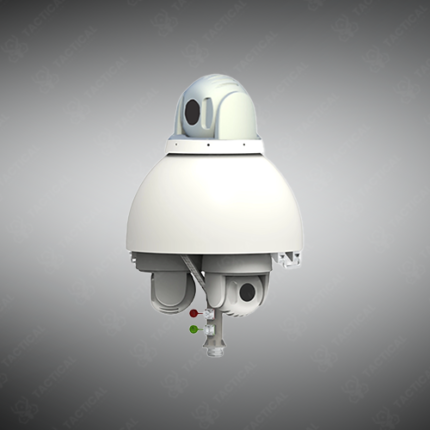
Active marker systems are electronic tagging and identification devices that emit a detectable signal — RF, infrared, or a combination of both — to mark the position of personnel, assets, or vehicles for identification by friendly forces, overhead ISR platforms, or ground-based sensors. Unlike passive reflectors or chemlight-based markers, active systems generate their own signal output, providing reliable detection at greater distances and through obscurants including smoke, dust, and low-visibility atmospheric conditions.
Core hardware typically consists of a compact transmitter unit worn on kit, mounted to a vehicle, or fixed to an asset, broadcasting on designated frequencies or pulsing in IR wavelengths visible only through night vision equipment. Common form factors include clip-on beacon modules, patch antennas integrated into plate carrier accessories, and vehicle-mounted strobes. Battery life on operational units ranges from 12 hours to over 72 hours depending on transmission mode — continuous broadcast consumes significantly more power than interval-pulsed operation.
IR strobe variants are invisible to the naked eye but clearly visible through Generation 2 or Generation 3 image intensifier tubes and thermal optics, making them standard for night operations where visual identification between friendly units is critical. RF-based active markers integrate with Blue Force Tracking networks and GPS-linked command systems for real-time position display on digital maps.
In Pakistan, active marker systems are relevant to military operations, counter-terrorism unit coordination, joint force deconfliction, and VIP convoy tracking in areas with complex operational environments.
Tactical Supply Pakistan stocks active marker systems across IR strobe, RF beacon, and combined configurations for professional security and defence applications.
Showing the single result