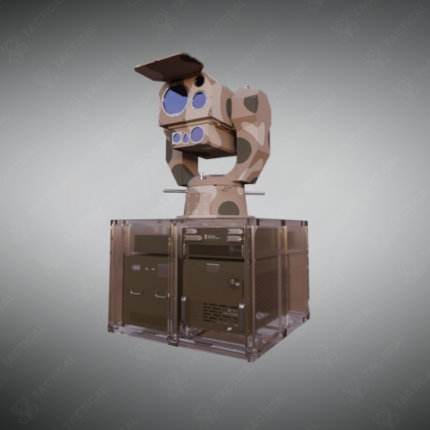
Acoustic Anti Drone System
An acoustic anti-drone system detects and classifies unmanned aerial vehicles by analysing the sound signatures produced by their motors, rotors, and airframes. Every drone model generates a distinct acoustic profile — rotor blade frequency, motor harmonic pattern, and frame resonance combine to create a fingerprint that a calibrated microphone array can identify and separate from background noise.
The core hardware consists of multiple directional or omnidirectional microphones arranged in a fixed array configuration, feeding raw audio data into a signal processing unit running classification algorithms trained on a library of known drone acoustic signatures. Detection range varies significantly with ambient noise levels — in quiet rural or semi-urban environments, capable systems can detect small commercial drones at distances between 150 and 500 metres, while urban deployments with high background noise require tighter array configurations and more aggressive filtering to maintain reliable detection.
Output from the processing unit typically feeds into a unified threat display showing bearing angle, confidence level of drone classification, and alert status. Integration with radar, RF detection, and electro-optical sensors is common in layered counter-drone architectures, where acoustic detection serves as a passive, non-emitting first-line sensor that does not reveal the security installation’s presence to the operator of the drone.
In Pakistan, acoustic anti-drone systems are relevant to critical infrastructure protection, VIP venue security, military base perimeters, and sensitive government facilities where early, passive detection of drone intrusion is operationally valuable.
Tactical Supply Pakistan stocks acoustic anti-drone detection hardware for integration into single-layer and multi-sensor counter-UAS deployments.
Showing the single result