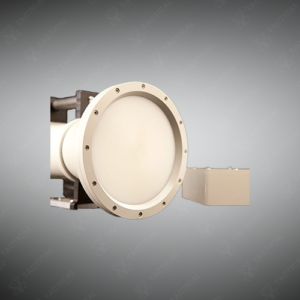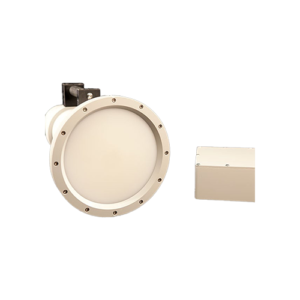

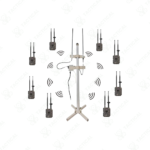
Private Network Surveillance Antenna
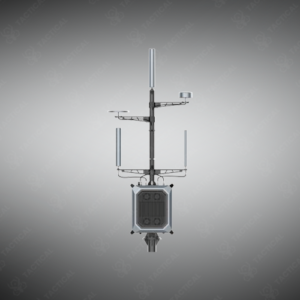
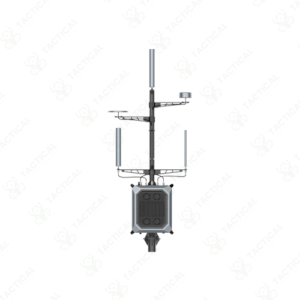
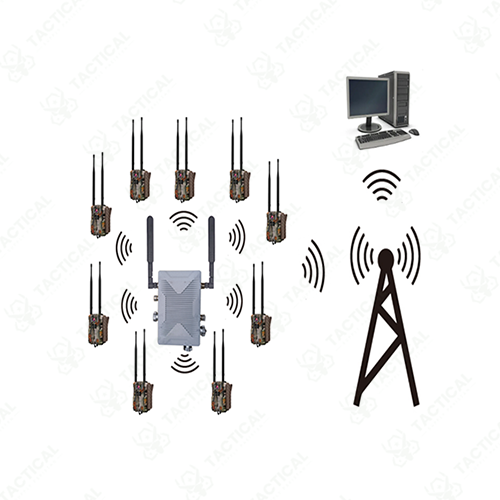
Private Network Surveillance System is a Self-contained outdoor surveillance solution designed for remote and signal-denied locations, enabling secure long-range monitoring without reliance on public communication networks.
Key Features:
✔️ Designed for no-signal environments such as borders, wildlife reserves, and remote zones
✔️ Operates on private network architecture independent of public cellular coverage
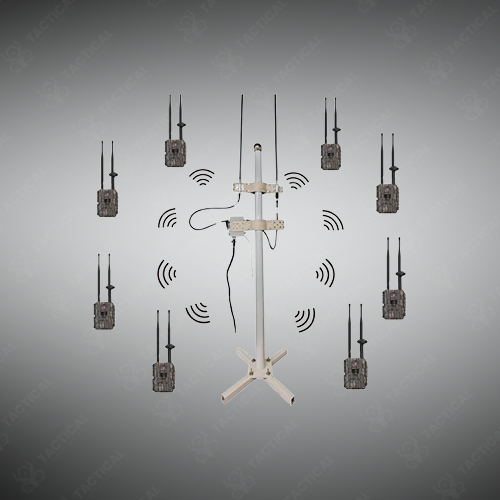
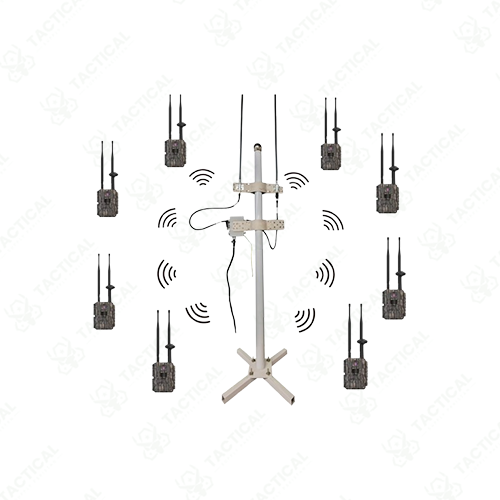
✔️ Supports up to 16 slave cameras per network with long-distance data transmission
✔️ High-bandwidth, strong-diffraction communication modules for stable connectivity
✔️ Central base station with integrated mini processing server for data aggregation
✔️ Secure data transfer to control or data collection centers
✔️ Modular system architecture allows flexible deployment and scaling
✔️ Compatible with multiple backhaul options including internet, 4G, and optical fiber
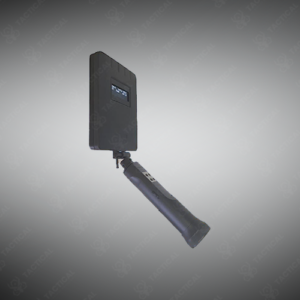
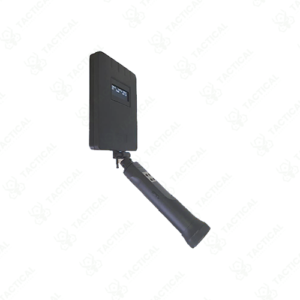
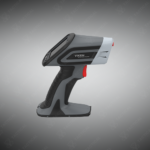
✔️ Expandable with optional devices like environmental sensors and handheld controllers
✔️ Widely used by border forces, military units, wildlife protection, and research teams
Private Network Surveillance Antenna
The Private Network Surveillance Antenna establishes independent monitoring infrastructure in locations lacking cellular coverage or internet connectivity. The LinkEye architecture supports up to 16 slave cameras communicating with a central base station equipped with fast broadband transmission, long-distance signal propagation, and strong diffraction modules that overcome terrain obstacles. Base stations incorporate mini processing servers that aggregate video data before relay to control centers via internet, 4G network, or optical fiber connections.
The system operates independently from public telecommunications networks, preventing signal interception or unauthorized access to surveillance feeds. Expandable devices include environmental sensors measuring temperature, humidity, and motion detection triggers. Handy controllers allow field personnel to adjust camera angles and recording parameters without returning to base stations. Walkie-talkie integration enables voice coordination between monitoring teams and control center operators during active threat responses.
Border patrol agencies deploy the Private Network Surveillance Antenna across unmanned frontier sections where conventional infrastructure proves absent. Customs enforcement teams position cameras at illegal crossing corridors, capturing smuggling attempts in real-time. Anti-poaching task forces monitor wildlife reserves, detecting intrusions into protected territories where elephant and rhino populations face extinction pressure. Military installations establish perimeter security networks around forward operating bases in hostile territories. Wildlife researchers track animal migration patterns through camera networks transmitting behavioral data to remote analysis centers.
Tactical Supply Pakistan supplies private network surveillance platforms that maintain operational security in infrastructure-limited environments. The company provides site surveys to determine optimal camera placement and base station positioning for maximum coverage with minimum equipment deployment.
How does the diffraction module technology improve signal transmission through dense vegetation and mountainous terrain?
Diffraction modules exploit radio wave bending around physical obstacles, maintaining connectivity when direct line-of-sight paths experience blockage from forest canopy or ridgelines that would otherwise terminate conventional wireless links between cameras and base stations.
- Fast Shipping: We partner with reliable delivery services to make sure your order gets to you quickly. We work hard to ensure every package arrives safely and on time.
- Quick Processing: Your order is processed and prepared for shipping within 24 to 48 hours. This allows us to send it out to you as fast as possible after your payment is confirmed.
- Tracking: Once your order is on its way, we will provide you with a tracking number. You can use this number to easily follow your package's journey and know exactly when it will arrive.
- Nationwide Delivery: We offer delivery to all locations across Pakistan, including major cities and remote areas. No matter where you are, we can get your order to you.
At Tactical Supply Pakistan, our relationship with you doesn't end after a sale. We are dedicated to making the long-term performance and reliability of our high-quality tactical and supplied equipment. Our commitment is to provide you with seamless support and peace of mind.
- Free Installation: We'll set up your new equipment for you, so it's ready to go. You can focus on your work while our engineers handle as per the guidelines for manufacturer.
- Maintenance: We offer quick replacements where necessary, to keep your gear in top condition. Our team will make sure your equipment is always ready when you need it.
- Customer Support: We're always here to help. Our support team is available to answer your questions and assist you long after you've made a purchase.
- Planned Preventative Maintenance: Our service includes preventative maintenance to keep your equipment in peak condition and prevent future issues.
HAVE QUESTIONS?
Fill out the form, and our team will respond promptly to assist with your product inquiries or order support.