



Blog
Intelligent Anti-UAV Detection System

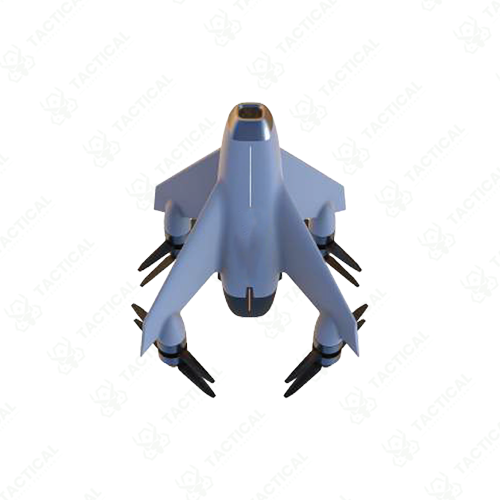
Anti-UAV Detection System
The Intelligent Anti-UAV Detection System, which consists of radar detection and visual detection, the Thunder Interceptor Subsystem, and the Skyshield Nexus Cloud-based Intelligent Command and Control System together form the Sentry Defense Technology Intelligent Counter-UAV Defense System. Through multi-point deployment and cloud-based collaboration, it can effectively detect and intercept long-range attack drones and loitering munitions represented by the Shahed-136 in a wide area.
1. Typical Threat Target Analysis: Shahed – 136
The Shahed-136, a one-way attack drone (loitering munition), poses a serious threat to critical infrastructure due to its low cost, large-scale deployment capabilities, and unique flight profile. This solution focuses on effectively countering such targets.
The key technical characteristics of Shahed-136 are shown in the following table:
| Feature Category | Parameter | Description |
| Flight Ability | Cruise speed: ~185 km/h Range: >1,500 km | Equipped with a piston engine, it has long endurance and long-range capabilities, and can launch attacks from outside the defense zone. |
| Dimensions Specification | Wingspan: 2.5 m Length: 3.5 m Radar Cross Section (RCS): Extremely small (approximately 0.01 m²) | Small in size, with a high proportion of non-metallic materials, it is difficult for traditional radars to stably detect and track. |
| Operational Height | Middle Section: Normal cruise: 700~2000 m Stealth Penetration: 100 – 300 m Final paragraph: 100~200 m | Usually employs low-altitude or ultra-low-altitude penetration, using terrain to evade radar detection. |
2. System Composition
This system is an intelligent, multi-layered anti-drone defense system specifically designed to address asymmetric threats represented by Shahed – 136. The system has the core advantages of “multi-dimensional perception, intelligent decision-making, hard-soft collaboration, and cloud-edge integration”.
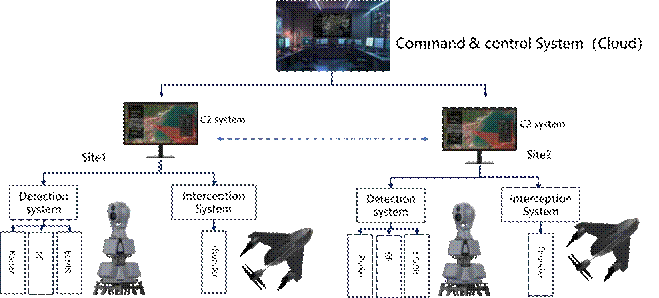
The system adopts an advanced “cloud-edge-end” three-tier architecture, ensuring efficient data processing, intelligent decision-making response, and strong scalability.
Cloud (Cloud): Skyshield Nexus SkyShield Cloud Management Platform, responsible for Data Analysis, threat intelligence aggregation, and remote operation and maintenance management.
Edge Layer (Edge): Sentry master node, manages all end-side devices within the unit, is the core of tactical decision-making, responsible for multi-source data fusion, AI threat assessment, and countermeasure decision-making.
Device Layer: Various sensors and effectors deployed at the front end, including Tracker Eye Pro, and Thunder . Meanwhile, this system supports the connection of radio jamming and navigation deception sub-devices to enhance countermeasure capabilities.
3. Workflow
The workflow of the Sentry system is highly automated, aiming to minimize the “Sensor-to Shooter Latency”.
3.1 Early Warning and Soft Kill Layer:
- Passive Detection: Tracker Eye Pro, as a device integrating radar and EO/IR, achieves target perception through the following full process:
3.2 Tracking and Hard Strike Layer:
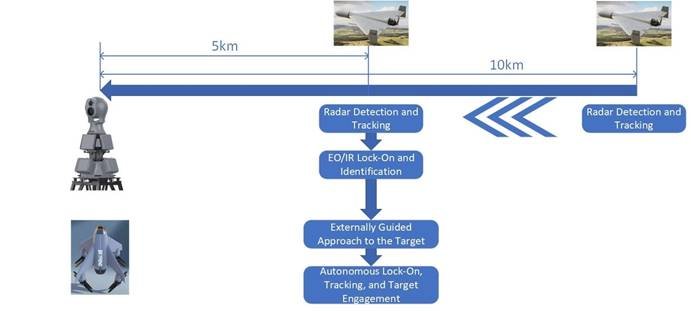
- Radar Detection and Tracking: Tracker Eye Pro’s phased array radar scans key area, quickly searches for and locks onto targets, and generates stable track data.
- EO/IR Verification and Locking: While the radar is tracking, the system guides the high-resolution electro-optical/infrared (EO/IR) turret to continuously observe the target and identify its features, further confirming the target type, eliminating false alarms, and providing precise guidance for subsequent strikes.
- Autonomous Interception: Once the target enters the mid-layer defense zone (approximately 8 km), the Tian Dun Edge Command and Control Node will transmit the target track information to Thunder Intelligent Interceptor. Thunder autonomously plans the optimal interception route, launches at high speed, and after visually recognizing and locking onto the target, executes autonomous impact and destruction.
3. Typical Application Scenarios and Solutions
The Sentry system can be flexibly configured according to different protection requirements to form targeted solutions.
3.1 Scene 1: Borderline Strip Protection
Requirement: Form an anti-drone buffer zone along the long border to prevent the infiltration of targets such as Shaheed-136.
Plan:
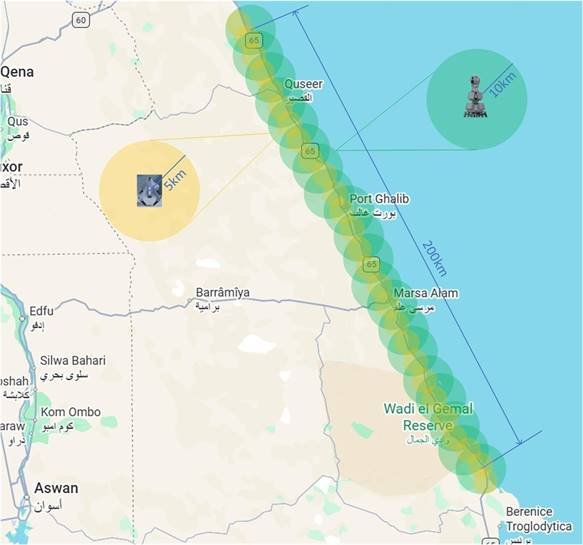
Deployment Method: Multiple groups of Tracker Eye Pro devices are deployed along the border. Each group of devices is configured in180° sector coverage mode, with the antenna facing the direction of external threats.
Coverage Capacity Calculation:
Tracker Eye Pro has an effective detection range of 10 km for large fixed-wing aircraft such as the Shaheed -136.
Single set of equipment (180° coverage): can effectively cover a semi-circular area with an area of 157 square kilometres.
Deployment of 20 sets of equipment in a network: Assuming one set of equipment is deployed every 10 km along the border, a defense line up to 210 km long can be formed. The total coverage area is approximately 2,100 square kilometres of a strip-shaped isolation zone.
3.2 Scenario 2: Point-like Protection of Core Key Areas
Requirement: Protect individual high-value targets, such as critical infrastructure, government buildings, military bases, etc., from precision drone strikes.
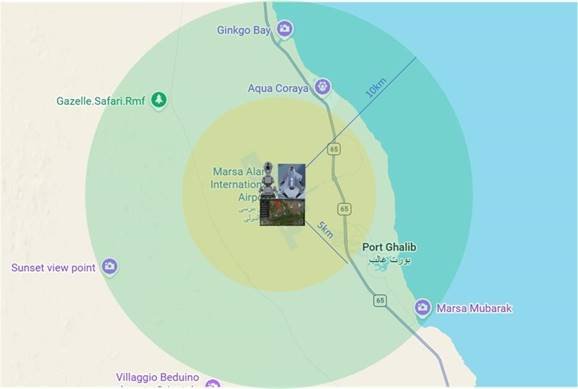
Deployment Method: Deploy a single set of Tracker Eye Pro devices at the key domain center or high point to achieve 360° omnidirectional coverage mode. Interceptors can be distributed at edge locations to reduce the time consumption in the initial and middle stages, thereby achieving faster and more efficient interception results.
Coverage Calculation: Single Set of Equipment (360° Coverage): Can effectively cover a circular area centered around itself, forming a “safety dome” with a radius of 5 km and a protected area of 78.54 km².
4. Technical Specification
4.1 Track Eye Pro
4.1.1 Overall Performance of the Fusion System
| Parameter Item | Technical Specifications |
| Radar Detection Range | Shahed-136(rcs0.01 ㎡):≥5 km Large fixed-wing (RCS 0.2 ㎡): ≥10 km |
| Recognizable target types | UAVs, airliners, birds, pedestrians, vehicles |
| Coverage | Horizontal: 360°, Pitch: 0° ~ 90° |
| AI target recognition accuracy | ≥ 98% (for drones) |
| Protection Class | IP66 |
| Rated Power | 1500W |
| Total Weight | 250kg |
| Operating Temperature | -40℃ ~ +60℃ |
4.1.2 Radar Subsystem (Tracker Pro)
| Parameter Item | Technical Specifications |
| Operating Frequency Band | X Band (9.2 ~ 9.8 GHz) |
| Scanning Mode | Active Electronically Scanned Array (AESA) |
| Coverage | Horizontal: 360°, Pitch: 0° ~ 30° (max. expandable to 60°) |
| Target Capacity | Search (TWS): ≥500; Tracking (TAS): ≥6 |
| Precision | Distance: ≤10 m; Speed: ≤1 m/s; Azimuth: ≤0.5°; Elevation Angle: ≤0.5° |
| blind spot | ≤ 200 m |
4.1.3 Pan-Tilt-Zoom (PTZ) Optoelectronic Subsystem
| Module | Parameter Item | Technical Indicators |
| Visible Light | sensor | 1/1.8″ target surface starlight-level CMOS |
| Lens focal length | 23 ~ 230 mm HD electric zoom | |
| Detection Performance | Detection ≥12,000 m, Identification ≥10,000 m (3.5m×2.5m UAV) | |
| Infrared Thermal Imaging | Detector Type | Uncooled Vanadium Oxide (VOx) Focal Plane Array |
| Lens focal | 23 ~ 230 mm, 10x continuous zoom | |
| length | ||
| Detection Performance | Detection ≥8000 m, Identification ≥5000 m (3.5m×2.5m UAV) | |
| Servo Turntable | Rotational Speed | Horizontal: ≤120°/s, Pitch: ≤90°/s |
| Tracking Accuracy | ≤ 0.15 mrad |
4.2 Interceptor (Thunder)
| Parameter Item | Technical Specifications |
| Working Radius | 5 km |
| Maximum Level Flight Speed | ≥ 350 km/h |
| Cruise Speed | 150 km/h |
| Service Ceiling | 3 km |
| Control Mode | Autonomous control of the full mission process, supporting manual takeover |
| Mission Payload | 0.4 kg |
| Operating Temperature | -20℃ ~ +60℃ |
4.3 Command and Control System (Skyshield Nexus)
| Functional Dimension | Core Competency Description |
| Air-Ground Integrated | Integrate multi-source perception networks, coordinate diverse defense measures, and build an all-round, multi-level air-ground |
| Joint Defense | coordinated protection system. |
| Full-process closed-loop intelligent decision-making | It covers the entire chain of “reconnaissance – determination – decision – action – review”, relying on the AI autonomous decision-making engine to achieve full automation from detection to interception. |
| Millisecond level response in complex scenarios | Supports distributed networking of thousands of devices, achieves millisecond-level Object Tracking and threat assessment through high-performance computing power, and effectively responds to swarm attacks. |
