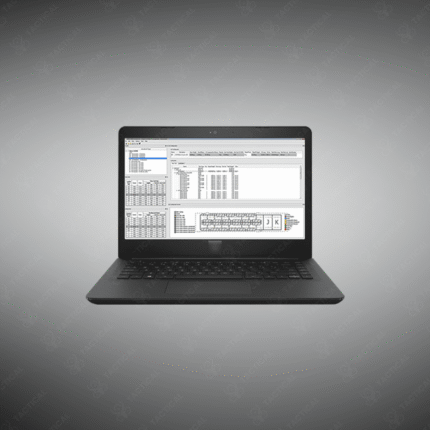
Load Manager
-
Definition & Function
Load Manager is a software platform designed to manage and optimise load‑flow operations—such as freight loads for logistics companies and weight/balance for aviation carriers. For example, one version of Load Manager is a TMS tool for freight brokers and carriers.
Another version is a departure control/weight & balance solution in aviation from Sabre Corporation. -
Key Features
-
Freight TMS version: rate con/dispatch reports, BOL/invoices, GPS tracking, load‑board posting, carrier database, EDI integration.
-
Aviation version: weight and balance planning, centre‑of‑gravity optimisation, load planning workflow, safety checks.
-
Production/fabrication version: real‑time load balancing across machines, scheduling & capacity view (see for example a “Load Manager” module in manufacturing).
-
-
Applications & Use Cases
-
Logistics/freight: Brokers and carriers managing thousands of loads per month, real‑time visibility, driver/truck tracking.
-
Aviation: Airlines optimizing payload, centre‑of‑gravity, ensuring safe and efficient loading of aircraft.
-
Manufacturing & production: Balancing workloads across machines to maximise throughput and respond to disruptions.
-
-
Benefits & Value
-
Efficiency gains: Reduced manual load‐entry, faster dispatching, real‑time tracking and integrated billing/reporting.
-
Safety & compliance: In aviation version, ensures business rules, safety checks, and weight‑balance compliance.
-
Scalability & visibility: Supports large fleets, multiple users, real‑time dashboards and analytics.
-
-
Pricing & Licensing Model
-
Example: Freight‑broker TMS edition of Load Manager starts at US $79.95/month per user.
-
For enterprise or custom versions (aviation, manufacturing), pricing is typically custom‑quoted based on number of users, modules, integrations required.
-
-
Key Considerations for Procurement
-
Determine exactly which version of “Load Manager” you need (logistics, aviation, manufacturing) and ensure module compatibility.
-
Check integration capabilities (GPS, EDI, accounting software like QuickBooks/Microsoft Dynamics).
-
Verify support, training, uptime/SLA, security compliance (e.g., for logistics version: HIPAA, SSAE16, ISO27001)
-
Evaluate how it scales and whether your business processes (load volumes, fleet size, data sources) fit the solution’s capacity.
-
Budget for user licenses, module add‑ons, training & implementation, ongoing maintenance/support.
-
Showing the single result