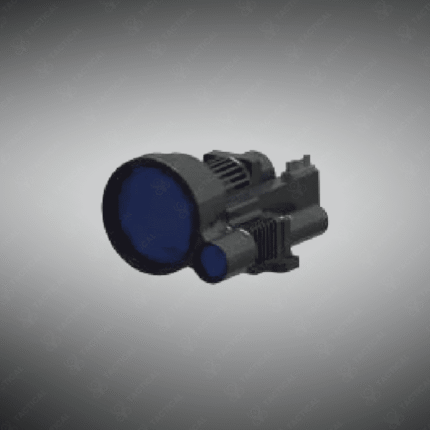
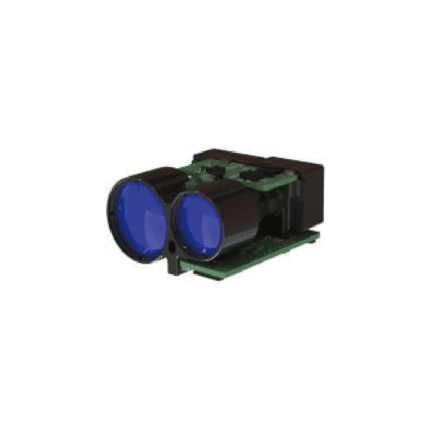
Laser Range Finder Module
-
Wavelength / eye‑safety tradeoff
-
905 nm (near‑IR): common, inexpensive, good detector sensitivity; not fully eye‑safe at long power/continuous modes — often Class 1 for low‑power modules but verify.
-
1550 nm: safer for eyes at equivalent power (lower retinal hazard), better for high‑power/long‑range covert use, but typically more costly.
-
-
Range performance & what influences it
-
Stated max range depends on target reflectivity, atmospheric conditions, and beam divergence. Typical module claims assume high‑RCS (reflective) targets.
-
Expect big range drops against small, low‑reflectivity, or adverse-weather targets.
-
-
Accuracy & resolution
-
Typical OEM modules: ±0.1 m to ±1.0 m accuracy; resolution (least increment) often 0.01–0.1 m. Choose based on application (surveying needs tighter specs than obstacle sensing).
-
-
Beam divergence & spot size
-
Narrow beam (low divergence) → smaller spot at range → better for small targets but requires more pointing precision. Wider beam easier to hit targets but less precise.
-
-
Interfaces & integration
-
Common outputs: TTL, UART/RS‑232, USB, SPI, CAN. Some modules give continuous profiles or filtered averages. Check sample rate, trigger modes (single/continuous), and data protocol.
-
Power: modules can be low‑power (battery friendly) or require regulated supplies (check startup inrush and operating current).
-
-
Environmental & mechanical
-
Look for operating temp range, shock/vibration spec, and IP rating if outdoors. Mounting options (C‑mount, M4 holes, dovetail) and optical window coatings matter for durability.
-
Showing the single result