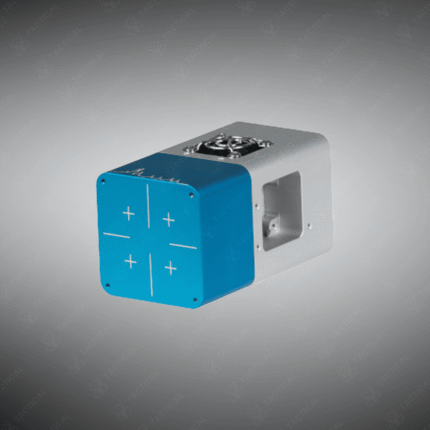
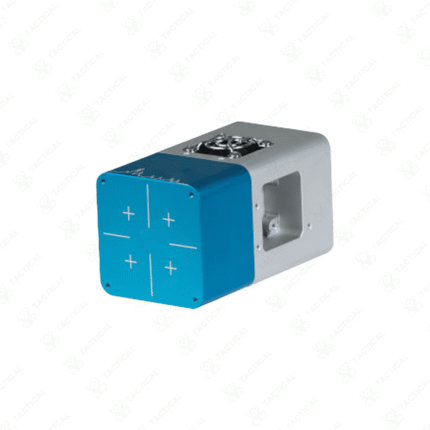
Integrable Gamma Sensor
-
Purpose & Use‑Case: These sensors are designed to be embedded into larger systems — for example unmanned vehicles, drones, robots, fixed monitoring stations or sensor suites — to detect gamma radiation, perform spectroscopy, and/or image radioactive sources.
-
Key Specifications: Performance may include energy range (e.g., ~50 keV to 3 MeV), high energy resolution (e.g., ≤0.8 % FWHM at 662 keV for advanced modules) and real‑time imaging or localization of gamma sources.
-
Integration & Interface: These modules commonly support USB, Ethernet, wireless or custom DB‑9 connectors, low power (<10 W in some cases), rugged and compact form factors to facilitate integration into vehicles or sensor platforms.
-
Ruggedness & Environmental Tolerance: Because they may be used outdoors, on drones or in harsh environments, many are ruggedised: wide operating temperature ranges (e.g., –40 °C to +50 °C), ingress protection (IP65 or higher) and shock/vibration tolerance.
-
Application Domains & Benefits: Typical applications include nuclear / radiological threat detection, border security, drone‑based survey, fixed environmental monitoring, and industrial safety (e.g., monitoring for unintended radioactive sources). They provide precise identification of isotopes, source location, and can integrate into larger analytics systems for enhanced situational awareness.
Showing the single result