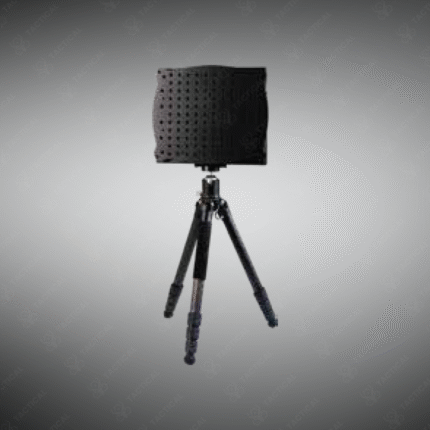
Drone Detection and Tracking System Based on Fused
A Drone Detection and Tracking System Based on Fused sensor technology integrates data from multiple, disparate sensors—such as radar, RF (radio frequency) detectors, electro-optical/infrared (EO/IR) cameras, and acoustic arrays—to create a unified, highly reliable air picture. Sensor fusion overcomes the limitations of any single technology by combining their strengths: radar for long-range detection, RF for identifying control signals, cameras for visual confirmation and classification, and acoustics for passive, close-range detection. This fused data provides robust, low-latency tracking and classification of unauthorized drones, even in cluttered urban environments or against low-flying, small UAVs.
Key Advantages of Fused Sensor Architecture:
– Increased Detection Probability: Combines sensors to cover blind spots; e.g., radar misses a drone in ground clutter, but RF or acoustics pick it up.
– Reduced False Alarms: Correlating data from multiple sensors (e.g., an RF signal plus a radar track) significantly decreases false positives from birds or other interferents.
– Enhanced Tracking Accuracy: Fuses kinematic data (position, speed from radar) with identity data (type from RF signature or visual) for a comprehensive track.
– Improved Classification: Determines if a detected object is a drone, its model, and whether it carries a payload by fusing visual/IR imagery with RF signal analysis.
– All-Weather, Day/Night Operation: Radar and RF work in any condition; cameras provide daylight/thermal imagery when available.
– Unified Command Interface: Presents a single, cohesive track on an operator’s screen, simplifying the decision-making process for countermeasure deployment.
Achieve unparalleled airspace awareness with multi-sensor intelligence. Implement a Fused Drone Detection and Tracking System from Tactical Supply Pakistan.
Showing the single result