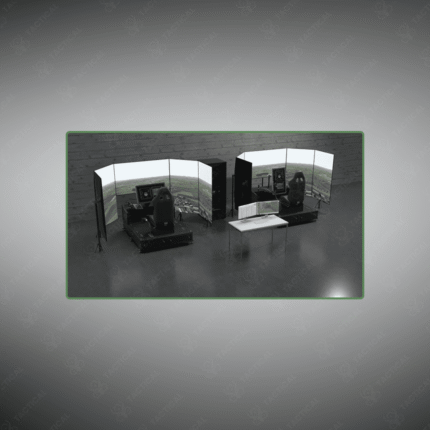
Best Mission Rehearsal Trainer (MRT)
-
High-fidelity mission environment replication — The MRT should replicate real mission conditions including aircraft systems, avionics, weapons/tactics, terrain/CGF, and joint/combined operations. For example, HENSOLDT’ MRT offers “Reconnoitring the mission area … Planning and verifying tactical missions … Crew coordination” modules.
-
Deployable / modular / low footprint design — Ideally the system can be deployed in forward bases or satellite locations, with compact footprint and rapid setup. For instance, the Lockheed Martin MRT-LITE for the F-35 offers a “small footprint and modular configuration … reduced hardware requirements”.
-
Immersive visualization & crew coordination — Effective MRTs include immersive visuals (VR/MR), multi-station (pilot + crew + ground party) so entire team can rehearse. For example, Kratos Defense & Security Solutions’ system integrates cockpit simulator + ground party simulator for fully immersive training.
-
Flexible scenario generation & live-data integration — The system should allow rapid scenario changes (threats, weather, mission changes) and integration of actual reconnaissance/intel data into the visual database. HENSOLDT mentions “fast and easy integration of actual reconnaissance results in the visual database”.
-
Cost-effectiveness and lifecycle savings — Training systems should reduce reliance on live sorties, save aircraft wear/fuel/hours and accelerate crew readiness. Kratos’ MRT achieved major cost/time savings for readiness training.
-
Support & adaptability for local/regional use — The vendor should provide sustainment, upgrades, localisation (language, region-specific threats/terrain), export/ITAR support and training. For deployment in locations like Pakistan this is particularly important (import, regional partner, local user-interface).
Showing the single result