

F-500 EA® Fire Extinguisher
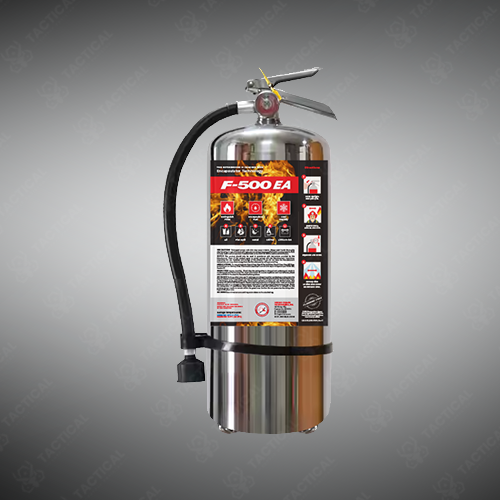
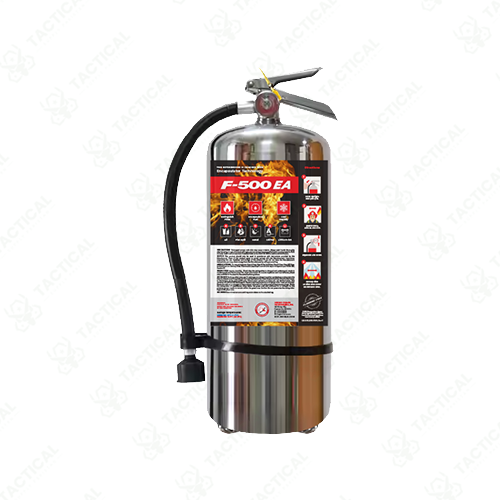
F-500 EA® Fire Extinguisher delivers encapsulator-based suppression designed to control lithium-ion battery fires and flammable liquid hazards with minimal equipment damage.
Key Features:
✔️ Encapsulator agent suppresses lithium-ion battery thermal runaway events
✔️ Certified for batteries up to 600Wh under NEN NTA 8133 testing
✔️ Stainless steel extinguisher body with misting or straight bore nozzle options
✔️ Fine mist dispersion maximizes fuel encapsulation and cooling
✔️ Neutral pH (~7) formulation safe for electronics and sensitive equipment
✔️ Fluorine-free agent confirmed PFAS-free under EPA Modified 537 testing
✔️ Biodegradable agent classified as non-hazardous under RCRA CFR261
✔️ Suppresses Class A, B, C, and lithium-ion battery fires
✔️ Effective for consumer electronics, EV batteries, and flammable liquid spills
F-500 EA® Fire Extinguisher
The F-500 EA® Fire Extinguisher delivers encapsulator agent through stainless steel construction with misting nozzle or straight bore discharge options. NEN NTA 8133 certification validates thermal runaway suppression capability on lithium-ion batteries up to 600Wh capacity found in consumer electronics. The misting nozzle configuration provides optimal control during smartphone, laptop, drone, and e-bike battery fires through fine droplet dispersion that maximizes fuel encapsulation surface area. Single-charge deployment neutralizes half-gallon flammable liquid spills within minutes by forming spherical micelles around polar and non-polar fuels.
The encapsulator agent operates at approximately pH 7, preventing corrosion damage to sensitive electronics and equipment during discharge. EPA Modified 537 testing confirms fluorine-free formulation without PFAS compounds that contaminate groundwater and persist in biological systems. International biodegradability recognition allows disposal as non-hazardous waste under RCRA CFR261 standards. The agent simultaneously addresses all four fire tetrahedron elements—heat absorption, fuel encapsulation, oxygen displacement, and chemical chain reaction interruption—versus single-element suppression from dry chemical extinguishers.
Aircraft cabin crews deploy F-500 EA® Fire Extinguishers during passenger device thermal events where confined space ventilation limits CO2 discharge options. Data center technicians position units near lithium-ion UPS battery racks addressing incipient fires before thermal runaway propagates to adjacent cells. Manufacturing facilities place extinguishers at e-bike and power tool assembly stations where quality control testing occasionally initiates battery failures. Warehouse operations stock units in charging areas for electric pallet jack and material handling equipment battery maintenance locations where lithium-ion fire risks concentrate.
Tactical Supply Pakistan supplies portable fire extinguishers addressing lithium-ion battery hazards in commercial and industrial facilities. The company provides training on proper discharge techniques for lithium-ion battery fires and guidance on strategic placement locations based on occupancy classifications.
How does encapsulator technology prevent re-ignition better than dry chemical extinguishers?
Encapsulation forms molecular barriers around flammable electrolyte preventing vapor release, while dry chemical agents only temporarily interrupt combustion without addressing continuous fuel vapor generation from damaged lithium-ion cells.
- Fast Shipping: We partner with reliable delivery services to make sure your order gets to you quickly. We work hard to ensure every package arrives safely and on time.
- Quick Processing: Your order is processed and prepared for shipping within 24 to 48 hours. This allows us to send it out to you as fast as possible after your payment is confirmed.
- Tracking: Once your order is on its way, we will provide you with a tracking number. You can use this number to easily follow your package's journey and know exactly when it will arrive.
- Nationwide Delivery: We offer delivery to all locations across Pakistan, including major cities and remote areas. No matter where you are, we can get your order to you.
At Tactical Supply Pakistan, our relationship with you doesn't end after a sale. We are dedicated to making the long-term performance and reliability of our high-quality tactical and supplied equipment. Our commitment is to provide you with seamless support and peace of mind.
- Free Installation: We'll set up your new equipment for you, so it's ready to go. You can focus on your work while our engineers handle as per the guidelines for manufacturer.
- Maintenance: We offer quick replacements where necessary, to keep your gear in top condition. Our team will make sure your equipment is always ready when you need it.
- Customer Support: We're always here to help. Our support team is available to answer your questions and assist you long after you've made a purchase.
- Planned Preventative Maintenance: Our service includes preventative maintenance to keep your equipment in peak condition and prevent future issues.
HAVE QUESTIONS?
Fill out the form, and our team will respond promptly to assist with your product inquiries or order support.